Showing posts with label loved this book. Show all posts

Thursday, January 4, 2018

Best Books of 2017!

I'm going to be honest here, it was hard to come up with a best of list this year. I started thinking about my best of list in mid November, and it was hard to narrow it down to just ten books, so much so that I thought I would have to do 13 like I did last year. And then, when it actually came time to make this list, I burned out on a lot of books I thought would for sure make the list and got to the point where it was hard to fill up spots. But I have 10 books on my worst list so I need to have 10 on my best list, that's just the way things go. So here it is, my favorite books of 2017!


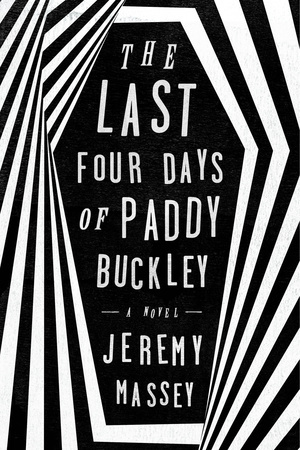
10. The Last Four Days of Paddy Buckley by Jeremy Massey (8.5-9/10)
  Starting off the list at number 10, we have The Last Four Days of Paddy Buckley! This is not a perfect book by any means, but it was practically made for me, being about a funeral home worker from Ireland who accidentally kills a mobster, siccing a prominent Dublin organized crime group on him. It's entertaining, even a little gory, and a whole lot of fun to read. The humor in the book is also fantastic, and as a whole it is the kind of book I would write if Massey hadn't already written it for me.

9. Tell the Wolves I'm Home by Carol Rifka Brunt (8.5-9/10)
  I didn't fully appreciate Tell the Wolves I'm Home when I first read it. This was because I read it in a month where the bad was much, much more obvious than the good, and then a couple of weeks later I read a little novel called Brideshead Revisited, which quickly became my obsession. But now I see I unfairly judged this book, and in retrospect, I really love it. It takes place in one of my favorite times, the 1980s, is about one of my favorite subjects to read about, the AIDS epidemic, and features one character I can really get behind, Toby. When I first encountered Tell the Wolves I'm Home, I thought it would be insufferably twee, like a cozy mystery novel, but instead ended up being about some rather dark stuff, like watching a close family member die of a horrible disease, realizing postmortem that he had a whole life he kept hidden, and then watching your one connection to his secret life die horribly of the same disease that killed your family member. The reason for it being so low on this list is because it does have some of that literary fiction-type nonsense, but that didn't stop me from appreciating the depth to what could have so easily been a "cute" novel.


8. Life: An Exploded Diagram by Mal Peet (8.5-9/10)
  Life was not my first introduction to the late Mal Peet, no, that honor goes to Tamar, which I read a few years ago and really liked. But Life is one of the most original historical fiction novels I have ever read, and one of the most entertaining, too. Not only that, but it feels real. It reminded me of Bill Bryson novels such as The Life and Times of the Thunderbolt Kid or other books in that humor-memoir category. I wish more historical fiction writers, YA or adult, took their cues from this novel. 


7. Norwegian Wood by Haruki Murakami (9/10)
  2017 was the year of adult fiction for me, and that meant reading authors I had wanted to read for a long time, but never got up the courage to go near. Haruki Murakami, with his long, surrealist novels translated from Japanese into English, had always scared me. So naturally, I pick up his most vanilla novel to start with. This probably wasn't the best choice for an introduction into Murakami's work, but I still loved it, much more than I was expecting to. I think the main reason why I loved it so much is because Midori and Tomu are both such great characters with such fantastic chemistry and dynamics that it really made the book. Not only that, but it's easy to read and even easier to understand, surprising, especially for a foreign novel by, again, a famous magical realist writer who writes books with titles like Hard-Boiled Wonderland and the End of the World or 1Q84. I'm sure hard-core Murakami fans will hate me for loving this book, but I can't help it.


6. Wolf Winter by Cecilia Ekback (8.5-9/10)
  I would say that, with the exception of In the Woods, this was my first favorite book of the year. But when it came time to actually make this list, Wolf Winter was tied with The Good People, and in the end, Wolf Winter won out (I love Hannah Kent, but I never seem to have any room on any of my top lists for her books. In retrospect, though, I probably should have put Burial Rites on my 2016 list instead of Those Who Wish Me Dead). The reason that I went for Wolf Winter instead of The Good People is because Wolf Winter stuck with me more. For the next two months, I kept thinking about Wolf Winter and the characters and the story. I felt like a little piece of me was stuck in the Swedish Laplands, to be soap-opera-ish about it. What else can I say, except that I loved it.


5. In the Woods, The Likeness, Broken Harbor, and The Secret Place all by Tana French (8.5-9/10)
  For the first 5 months of the year, the thing I looked forward to the most was my monthly Tana French novel. I could never marathon the series- the books are dense mysteries that take a lot out of you- but I loved reading them. To me, 2017 was the year of Tana French- despite the fact that I read The Trespasser in December of 2016- and I can't wait for the next Dublin Murder Squad novel. Besides The Trespasser, you may notice the absence of Faithful Place, which I decided to not put on this list because I didn't really like it as much as I liked the other books. But yes, given how much I talked about them it was inevitable that they would make this list.


4. Graffiti Moon by Cath Crowley (9/10)
  Reading-wise, I didn't have a very good Summer of 2017, with the exception of this book (and, well, Life: An Exploded Diagram). Graffiti Moon is now one of my favorite YA contemporaries of all time. It's just so summer-y and Australian and wonderful. I loved Ed and Lucy, I loved Crowley's sense of humor, I even loved how everything worked out in the end. This isn't an important or literary novel by any stretch of the imagination, not like some of the other books on this list, but I loved reading it. Even now, it brings me to smiles every time I think about it, and that's why it's on this list.


3. Paris in the Present Tense by Mark Helprin (9/10)
  This isn't the first time the last book of the year makes the top three, and that's why I wait until after New Years to make these lists. Paris in the Present Tense is a stunning novel, writing- and character-wise. Jules is an amazing and unique main character, the two detectives were phenomenal comic relief, and it was just an amazing novel all together. It was the A Gentleman in Moscow of this year.


2. The Secret History by Donna Tartt (9-9.5/10)
  The Secret History is one of those books that I can't believe I took so long to pick up. Well, actually I can, but I shouldn't have been putting it off. Look, not everyone's going to like it. I probably shouldn't have liked it nearly as much as I did, but hey, life's funny that way. I think the thing that turns people off about it is that it's not a story driven novel, and the "murder mystery" is basically over after the first part. Instead, it's a long study into the minds of a bunch of spectacularly messed up characters, with tons of gorgeous atmosphere and intrigue. The Secret History is a rich chocolate cake of a book, basically. While I don't have any real desire to read anything else by Donna Tartt, The Secret History deserves its spot as number 2 on the list, mostly for getting me through the rest of the year.


1. Marina by Carlos Ruiz Zafon (9-9.5/10)
  Really, did anyone think that this book wouldn't make the top of the list? I mean, sure, The Secret History gave it some competition in the end, but it was always a sure win. Hell, I felt a little bit like an evangelical preacher with the way I was going around telling everyone to read this under-known masterpiece of a horror novel. It's creepy, it's gory, it's wonderfully written, it's endlessly amusing. Oscar and Marina and Germain and Dr Kolvenik all stayed with me throughout the year. Marina is this year's wildcard favorite, the one I never thought I would love as much as I did.


And now, some honorable mentions. I should explain: my main criteria for putting a book on my favorites list is that it has to be published, the American version at least, in the 21st century (with one notable exception), and I have to want to reread it. While I did like these books, they couldn't make the list because of one of these two things.


Running by Cara Hoffman (8-8.5/10) (my review)- I told you that I would find some way to put this book on this list and, yep, here it is. 


Little Monsters by Kara Thomas (8.5/10) (my review)- The best YA mystery I read all year. Still didn't like it enough to knock any of the above off my list.


Brideshead Revisited by Evelyn Waugh (9.5/10) (my review)- The reason for my only 21st century books rule is that without it, it would be easy to fill up this list with classics. But I would be remiss if I did not even mention Brideshead Revisited, a book I fell hard for this year and have not been able to stop thinking about. I love this book. It may even replace Gatsby as my favorite book of all time. I can't praise it enough.

So, what are your favorite books of the year? I'd love to hear about what you think about any of these books/what your choices are. Make my 2018 TBR list grow, people!

Sunday, December 31, 2017

Paris in the Present Tense by Mark Helprin Review

WARNING: THERE MAY BE SPOILERS BELOW

“I wish that, like you, I could have spent my life transported aloft, as it were, every day, in music.”- Paris in the Present Tense, Mark Helprin
Mark Helprin’s powerful, rapturous new novel is set in a present-day Paris caught between violent unrest and its well-known, inescapable glories. 

Seventy-four-year-old Jules Lacour—a maĆ®tre at Paris-Sorbonne, cellist, widower, veteran of the war in Algeria, and child of the Holocaust—must find a balance between his strong obligations to the past and the attractions and beauties of life and love in the present.

In the midst of what should be an effulgent time of life—days bright with music, family, rowing on the Seine—Jules is confronted headlong and all at once by a series of challenges to his principles, livelihood, and home, forcing him to grapple with his complex past and find a way forward. He risks fraud to save his terminally ill infant grandson, matches wits with a renegade insurance investigator, is drawn into an act of savage violence, and falls deeply, excitingly in love with a young cellist a third his age. Against the backdrop of an exquisite and knowing vision of Paris and the way it can uniquely shape a life, he forges a denouement that is staggering in its humanity, elegance, and truth.

In the intoxicating beauty of its prose and emotional amplitude of its storytelling, Mark Helprin’s Paris in the Present Tense is a soaring achievement, a deep, dizzying look at a life through the purifying lenses of art and memory.

Happy New Year's Eve! I hate New Year's. I don't really like things that celebrate the passing of time, which makes this book oddly perfect for the holiday.

Firstly, Paris in the Present Tense is a truly beautiful novel. This is going to be an extremely positive review, which means that I will not have much to say about it because, really, what is there to say about books like this beyond the fact that it is just beautiful? This is a book for someone often overwhelmed by the passage of time, a book for someone who often feels as if they don't belong where they are but can't think of anywhere else they'd rather be. This is a book for the person who constantly sways between his intellectual side and his emotional side. If you are any of those, or all three, this is the book for you.

Jules Lacour is just a wonderful character to follow around, in a book full of wonderful characters to follow around. His sense of humor and boundless love for everything was so wonderfully refreshing given the many, many fashionably cynical characters 2017 has produced. Refreshingly too, the majority of the humor in this novel is not sardonic or offensively funny, but rather lighthearted, with a lot of word-play and absurdist conversations. My favorite comic relief were the two detectives, their back and forth and true affection for each other worked so well.

Even so, there is sadness in the novel, and there is no one I felt worst for then the hapless insurance agent, Arnaud. My heart ached for him, and I was so happy that everything worked out for him and his family because I felt so bad for him and how his hideous coworkers treated him. If anyone deserved a win, it was him.

Helprin's view of Paris also deserves mention. Many novels portray Paris as this Utopian of art, music, and intellectualism. Helprin does not, and it feels so much more realistic. In this book, France's flaws are exposed- the prejudice against Jews, the mutual dislike or distrust felt by many locals and North African immigrants towards each other. France is a beautiful country, but also one deeply flawed- just like every other country.

And so I loved Paris in the Present Tense. It is entirely likely that Paris in the Present Tense will make it pretty high up my favorite books list (which will be up after my wrap-up, I promise). Highly, highly recommended.

9 out of 10

If you liked this book, you may also like:

Thursday, November 30, 2017

The Secret History by Donna Tartt Review

WARNING: THERE MAY BE SPOILERS BELOW

“I suppose at one time in my life I might have had any number of stories, but now there is no other. This is the only story I will ever be able to tell.”- The Secret History, Donna Tartt
Under the influence of their charismatic classics professor, a group of clever, eccentric misfits at an elite New England college discover a way of thinking and living that is a world away from the humdrum existence of their contemporaries. But when they go beyond the boundaries of normal morality they slip gradually from obsession to corruption and betrayal, and at last - inexorably - into evil.

Yes, I'm aware that this book was published in the 90s and I don't usually write full reviews for books not published in the 21st century because, well, I don't see how my thoughts about Bukowski's Ham and Rye (but you can look forward to that in my wrap-up) or Capote's Answered Prayers would really bring anything new to the table. But with this book I feel compelled to write a full review.

I thought I would hate this book. And I'm sure if you saw my tastes in books you'd probably think the same thing. It's long, kinda pretension, and there is a laundry list of flaws with the characters- they're cold, selfish, unfeeling, and cannot deal with reality. 

And yet I loved every goddamn page of this book. 

The writing is Fitzgerald-esque. The characters, with their suits and cigarettes and problems with hard liquor are old-fashioned in a way that endears me. In fact, the book feels like it should take place in the Edwardian times or the Roaring Twenties instead of the late 80s early 90s, and for once I was not annoyed by the fact that the book doesn't seem to know when it wants to take place. Instead, I liked it- the strange old-fashionedness of the twins, Francis, Henry, and to a lesser extent Bunny only served to set them apart from all the other characters, show how different they are from Judy and Cloke.

The biggest sign as to how much I liked this novel is that I was not once bored by it. I mean, when it's a 500+ page novel and the murder happens with 300 pages of story left to get to, this basically means that The Secret History will go down as one of my favorite books ever. The last time a long book managed to capture my attention until the end, it was A Gentleman in Moscow which I read last September. I understand that some people were extremely bored in the second half, but I was loving it. I was intrigued by all the characters and I didn't really want it to end. I didn't want to get out of the world that these characters inhabited. 400 pages into it, I was still laughing and grinning when something was reveled and swooning at Tartt's writing and overall just completely and utterly enjoying myself.

Seriously, I don't think I've enjoyed reading a book quite this much since, well, Marina back in March. I mean, sure, I've loved books since then, like Graffiti Moon or Norwegian Wood, but this was different. I think I actually fell in love with this book. I have this kind of annoying and very girlish habit of putting my hand above my heart when I love something (or when I'm surprised- I swear sometimes I'm one fainting couch away from being a Victorian lady) and that hand was almost permanently attached to my chest the entire time I was reading this book.

Do I have a favorite character? How can I choose between the twins, Francis, Bunny, or even Richard- who's a Nick Caraway narrator if there ever was one. By the end of the novel, even cokehead Judy had a special place in my heart.

The only thing I didn't really like about the book was the ending, but other than that, I adored the book. This is not the kind of book I'd freely recommend out, since, like in the case of Cara Hoffman's Running, it's meant for a very specific audience. I don't have any particular desire to read The Goldfinch now, but The Secret History will likely become one of my favorite books ever.

9-9.5 out of 10

Saturday, November 25, 2017

The Teacher's Funeral by Richard Peck Review (Kinda)

WARNING: THERE MAY BE SPOILERS BELOW

“Why she hankered to be a teacher, I couldn't tell you. But she had chalk dust in her veins, and she deserved to get that certificate. It was only fair.”- The Teacher's Funeral, Richard Peck
In 1904, Russell Culver 15 wants to leave school and his tiny Indiana farm town for the endless sky of the Dakotas. Instead of school closing, leaving him free to roam, his sister Tansy steps in. Despite stolen supplies, a privy fire, and many snakes, Tansy maybe, just maybe, can set her brother on a wiser course.

I thank three things for my love of history. Well, technically four- you know, the teachers that inspired me and blah blah blah. But mostly three things- American Girl, children's picture books, and Richard Peck. Unsurprisingly, they all have to do with books- I read Felicity's and Samantha's stories cover to cover, including the wonderful notes in the back that had all the historical facts, I loved those If You Lived... books (especially the parts about fashion), and I first fell in love with Richard Peck's writing when I was 10 years old and we were assigned The Teacher's Funeral. Prior to The Teacher's Funeral, I had always associated historical fiction with those musty smelling clearly 70s books you can find in the back of classroom bookcases or school assigned Very Important Books like Maniac McGee or Number the Stars or Bud Not Buddy (disclaimer: I actually like or at least don't hate the books I listed here). Sure, there were exceptions, like Catherine Called Birdy but I prefer to pretend that book doesn't exist. But The Teacher's Funeral didn't seem to have an obvious message attached, and was funny and dark and really, just a nice little story about growing up at the Turn of the Century in Indiana. And I loved it.

Looking back, The Teacher's Funeral is probably responsible for the kind of historical fiction I gravitate towards. I like often quiet and meandering stories about growing up in a time so different than our own. And I was delighted to find that all of Richard Peck's books were like that- my favorites were always A Long Way From Chicago and A Year Down Yonder, (God, even the titles take me back!) about a pair of kids whose parents send them down to their grandmother's farm from Chicago in the 30s. 

The best thing about The Teacher's Funeral is that there is no message. Well, I suppose it can be taken as being about the importance of education, but other than that it doesn't try and hit you over the head with anything. It's a coming of age story, I suppose, but it's not one like The Outsiders (another favorite from those late elementary/early middle school years). There is no giant life changing event, instead, it's a quiet one. 

And it's funny too. I was pleasantly surprised, given that I thought at first it would be full of cheap kid jokes. Instead, I found myself genuinely laughing out loud at some points and- what's more- I finally got some jokes that I didn't really understand as a child, like the cut-short swear words (I was an oddly naive little girl, especially given that neither of my parents ever censored themselves). 

I never read all of Richard Peck's books but he had a huge impact on my reading life nevertheless. I know that a majority of this review may just be nostalgia glasses, but I can't help it. No wonder this was one of my favorite books as a child. Also? That ending makes me want to cry. It made me want to cry all those years ago and it makes me want to cry today.

9 out of 10

Friday, October 27, 2017

The Last Four Days of Paddy Buckley by Jeremy Massey Review

WARNING: THERE MAY BE SPOILERS BELOW


“This misery of a gig called life is just a dream from which we all eventually awaken, he said. Nobody gets left behind. Even the most horrible dreams end.”- The Last Four Days of Paddy Buckley, Jeremy Massey
Paddy Buckley is a grieving widower who has worked for years for Gallagher’s, a long-established—some say the best—funeral home in Dublin. One night driving home after an unexpected encounter with a client, Paddy hits a pedestrian crossing the street. He pulls over and gets out of his car, intending to do the right thing. As he bends over to help the man, he recognizes him. It’s Donal Cullen, brother of one of the most notorious mobsters in Dublin. And he’s dead.

Shocked and scared, Paddy jumps back in his car and drives away before anyone notices what’s happened.

The next morning, the Cullen family calls Gallagher’s to oversee the funeral arrangements. Paddy, to his dismay, is given the task of meeting with the grieving Vincent Cullen, Dublin’s crime boss, and Cullen’s entourage. When events go awry, Paddy is plunged into an unexpected eddy of intrigue, deceit, and treachery.

By turns a thriller, a love story, and a black comedy of ill manners, The Last Four Days of Paddy Buckley is a surprising, compulsively readable debut novel.


Every so often, one comes across a book that he swears was made for him. The Last Four Days of Paddy Buckley is that for me. A funeral director main character. Organized crime. Black comedy. An international setting that also happens to be the same place my favorite series of this year is set in. Prose evocative of my favorite contemporary writer of all time, Markus Zusak. Even some particularly messed up moments. The writer is even an Irishman living in Australia! How the hell did it take me so long to find this book?

Also, Jeremy Massey was called, in one review, the Irish Carl Hiaasen. Growing up, Hiaasen's YA/children's novels were some of my favorite books out there- especially Flush (I should really dig that book out again). If I had any reservations about reading it before I definitely didn't after reading that comparison.

Not since Marina have I read a book so easy for me to fall in love with. It just has everything that works for me, a great plot line, awesome characters, a fantastic writing style. So why didn't it get the same high grade Marina got? Well, mostly because the book does have some flaws that were a bit too obvious for me to fully love this book. Like, I wasn't crazy about the sometimes random POV changes. They were a necessity, I get it, but I still found it jarring to go from a quite pleasant first person narrative to suddenly jump to Jack or Geno or Vincent or whoever with little warning. That could have been done better. I also wasn't too keen on the love story between Paddy and Brigid (though I admit the ending makes up for it). Those things annoyed me just enough to knock it down from a full 9 out of 10 to an 8.5-9. 

I brought up Markus Zusak because Paddy Buckley reminded me strongly of Ed Kennedy in I Am the Messenger, which as you know holds the title of my favorite contemporary of all time. I don't even know how to describe it except by saying that they both have a very... pleasant narrative style and strike me as the kind of people you'd get on with well in real life. They seem realistic, too, dealing with the often strange situations they find themselves in the same way people would in real life and, while they aren't impervious to fear, they have a calmness about them you could respect. If you can't tell by that, I really liked Paddy Buckley and could read three more books following him around (though I think this works quite well as a standalone and wouldn't necessarily want a sequel). 

As is often the case when I really enjoy a book, I have little to say about it. The book just worked for me. It's not by any means fine literature, but it's a ton of fun to read and one that will definitely make an appearance on my end of the year best of list. 


8.5-9 out of 10

Friday, October 13, 2017

The Boy in the Black Suit by Jason Reynolds Review

WARNING: THERE MAY BE SPOILERS BELOW

“...death isn't bad. It's not. It's just that life is so good. So damn good that you just wanna hold on to it, and everybody in it. But we can't. But what we can do, is appreciate it more. Y'know, smell the flowers.”- The Boy in the Black Suit, Jason Reynolds
Just when seventeen-year-old Matt thinks he can’t handle one more piece of terrible news, he meets a girl who’s dealt with a lot more—and who just might be able to clue him in on how to rise up when life keeps knocking him down—in this wry, gritty novel from the author of When I Was the Greatest.

Matt wears a black suit every day. No, not because his mom died—although she did, and it sucks. But he wears the suit for his gig at the local funeral home, which pays way better than the Cluck Bucket, and he needs the income since his dad can’t handle the bills (or anything, really) on his own. So while Dad’s snagging bottles of whiskey, Matt’s snagging fifteen bucks an hour. Not bad. But everything else? Not good. Then Matt meets Lovey. She’s got a crazy name, and she’s been through more crazy than he can imagine. Yet Lovey never cries. She’s tough. Really tough. Tough in the way Matt wishes he could be. Which is maybe why he’s drawn to her, and definitely why he can’t seem to shake her. Because there’s nothing more hopeful than finding a person who understands your loneliness—and who can maybe even help take it away.

First of all: Happy Friday the Thirteenth! Let's celebrate with another funeral home book, this time another reread from last year, The Boy in the Black Suit.

The interesting thing about The Boy in the Black Suit is that, even though it's a funeral home book, it's the one least about funeral home matters. Sure, there are bits about being a pallbearer, snippets from actual funerals, and the like, but unlike The Dead I Know, for instance, Matt doesn't go on calls to pick up dead bodies or have to dress them for their funerals. It's like funeral lite in that respect. 

Still, that doesn't mean that I don't really like this book. Matt is such a great main character to follow around. He's a kid that was certainly after my own heart, with his cooking and honesty and all that. Also, Reynolds has a keen understanding of what it's like to be a teenage boy. Admittedly, I've never been a teenage boy, but the things Matt does and his reactions just strike me as being very realistic. One of my favorite examples of this is when he goes over Lovey's house for Thanksgiving expecting a date and she takes him to the homeless shelter instead. He doesn't immediately warm up to the idea and yes, he is even a little upset that she didn't tell him they were going there in the first place. The Right Thing to Do would be to be happy at the idea of giving back on Thanksgiving, but honestly, what teenage boy would be excited about the idea of spending his Thanksgiving at a soup kitchen, especially when he was under the impression he would be on a one-on-one date with a pretty girl? Sure, Matt warmed up to the idea, but everyone probably would, too.

Also, like most teenagers, Matt is aware of what other people think of him, which is another great touch. I see a lot of authors who get praised for being able to get inside the mind of a high schooler, but Reynolds is one of the most successful at it.

The writing is pretty wonderful too. It's written in this New York black patois, which really puts Matt's voice in my head. The book has this conversational tone that makes me feel like I'm having a conversation with Matt and I love that. It makes me feel closer to him as a character without the author telling us a ton of exposition.

If I had to choose some points of criticism, it would be that in some parts it feels a bit juvenile or shallow, like in some of the parts where Matt is grieving his mother. I also wish the book didn't time skip so much, and a couple of the things that happened felt a bit contrived. That seems like a lot of stuff wrong with the book, but honestly, reading it is so much fun that it's easy to ignore that and just enjoy the story.

I also really wish there were more funerals in the book. Those were my favorite parts to read. Also, I kind of wish there was more about the funeral home itself, given that I know very little about the inner workings of inner city funeral homes. Being from New England Suburbia I'm used to the white vaguely-Colonial funeral homes with black trim and WASP-y sounding names written in somber font on the sign in front. I would be interested to know how Willie ran his home.

When I reread this my new rating actually went up from my old rating. This is definitely an 8.5 out of 10 now. I would recommend this book for someone who's maybe a little more squeamish so doesn't want to jump in with The Dead I Know, but someone who wants a little book with a lot of heart, which is corny but the best way to describe it. While I do prefer the former, this one is a close second.

8.5 out of 10 (old rating: 8 out of 10)

Monday, October 9, 2017

The Dead I Know by Scot Gardner Review

WARNING: THERE MAY BE SPOILERS BELOW


“There was the unknown, the dark, the cold and the emptiness to contend with out there, but those concepts are all relative. Cold compared to what? A dead hand? Dark compared to what? Unblinking eyes? At times the ocean seemed full beside my emptiness. At times it was the one knowable thing in my world.”- The Dead I Know, Scot Gardner
Aaron Rowe walks in his sleep and haunted by dreams he can’t explain and memories he can’t recover. Death doesn’t scare him—his new job with a funeral director may even be his salvation. But if he doesn’t discover the truth about his hidden past soon, he may fall asleep one night and never wake up. In this dark and witty psychological drama about survival, Aaron finds that making peace with the dead may be easier than coming to terms with the living.

This is a reread for me, and I wasn't going to write a whole review for it until I read another book about funeral homes that I was looking forward to read and was struck by an idea. One of my favorite things to read about are funeral homes and the whole death business. So, I decided that it would be fun to do a mini series of reviews on my blog in which I reviewed several books on funeral homes. I will be focusing on fiction, and probably mostly YA but I might include one or two adult novels- one of those books may or may not be The Loved One. So, here is my first entry- The Dead I Know by Scot Gardner.

The Dead I Know is one of the darker entries in the YA funeral home lit list with a very horror movie-esque plot despite the fact that the book is not a horror novel. Our main character, Aaron Rowe, is a sleepwalker, dealing with his Mam's growing dementia and also the nightmares that have been plaguing him since he was a young boy. So naturally, he takes a job- more like paid apprenticeship- at a funeral home. Sound logic, that.

When I was thinking of a word to describe the writing, quiet came to mind. This is almost ironic, given how much happens in such a short book, but Gardner does not rely on dialogue or other ways of explicitly stating things that have happened to move the plot along. Instead, it's very action-based with a lot of things shown to us. Surprising, because there are at least 3 separate plot lines going on in this short little novel. There's the funeral home, then there's the sleepwalking, then there's the dementia, and then there's the money stealing thing which probably was the least useful of all of them and had an unsatisfactory conclusion. 

The best thing about this book is Aaron Rowe. Though maybe I'm just saying that because I developed something of a crush on him. He's just really endearing, with the way he acts around Mam or Skye or John Barton. He's one of those characters with a lot of personality just through the way he speaks and acts. 

This is one of my favorite books in retrospect from 2016, and in hindsight perhaps some of the later entries on my list probably should have been substituted for this one and Burial Rites. Because this book isn't for everyone. The humor is dark, the funeral home parts are detailed and even on the explicit side for some people, and there's a lot going on for such a quiet book. But this is one of those few novels that just work for me. Almost everything about it works really well, and it's a staple novel for anyone who wants to get into the Death Business YA microtrend. 


8.5 out of 10 (reread)

Friday, September 29, 2017

Five Favorites- Speculative Fiction

Yes, here I am posting about speculative fiction, a gathering of genres I am not shy about admitting I stay away from, if you can't tell by my general lack of enthusiasm about it. I mean, the whole reason why I grouped them all together under the label of speculative fiction is because I didn't have enough material to draw it out and have a science fiction, a fantasy, a paranormal, a dystopian, and a horror list. I admit though, even with my drawing it out I am a bit embarrassed to say I had a hard time reaching five, since really only three were definites. But I need more time with my historical fiction and thriller lists, and fall is literally the only time I voluntarily bother with speculative fiction so I thought it would be nice to talk about it.

So, without further ado, here are my top five speculative fiction novels! In no particular order, of course.


1. The Unwind Dystology
  Originally, this list had a lot of nostalgic favorites such as The Girl Who Could Fly and the Percy Jackson series, but I haven't revisited those in a long time and while they both had a big impact on my life, I don't feel the need to go back to them like I did to the Unwind series. This is one of my favorite series of all time. Don't be put off by the dystopian genre classification. In fact, the first book came out three years before The Hunger Games swept onto the scene. So, what is this book about? Basically, it's set some undetermined time in the future after the Second Civil War, which was fought over abortion and resolved by the Unwind Accord, a law passed saying that 13-18 (later 17) year olds could be "unwound", retroactively aborted with all their parts used for transplants, which was a scientific discovery by then. We follow three teens, the typical YA trio of two-guys-and-a-girl, Lev Calder (he goes through like a million last name changes over the course of the series) who is a tithe which means he is going to be unwound willingly at the age of thirteen, Risa Ward, a state ward unwound because of budget cuts, and Connor Lassiter, a troubled teen whose parents unwound him as a last resort and also my biggest fictional crush. Him and Risa are also my number one OTP. There's also a lot more going on and that's just the first book. One interesting thing about the series is that the first book, Unwind, can be read as sort of a standalone, and then the other three books- UnWholly, UnSouled, and UnDivided are kind of like the actual series. It's a really great, really fucked up, and really underrated series, and has been reigning as one of my favorite books ever ever since I first read it back in middle school. It's basically my Harry Potter.


  Are you sick of hearing about this book yet? Well, you're probably going to hear about this book a lot more in the upcoming months. Because Marina is the current holder of my favorite book of the year, ever since reading it all the way back in March, and almost instantly became one of my favorite books of all time. This is a Spanish YA horror novel with heavy Gothic influences. It's about a boy, Oscar, who goes to this boarding school in Barcelona. As he wanders around the old part of town, he meets a man named German Blau and his daughter Marina who he becomes close to. From there, they find themselves getting involved in the dark and twisted world of Mijail Kolvenik, an inventor in postwar Barcelona. It's a very complex, complicated plot to describe, so normally I just tell people that it's basically a mix of Phantom of the Opera, Bioshock, Frankenstein, Edgar Allen Poe, and the science fiction-y parts of The Gentleman's Guide to Vice and Virtue. It's just really damn good.  


  Cormac McCarthy's The Road is a post apocalyptic nightmare of a book that hits you hard in the feelings. The prose is a thing of beige beauty, simplistic with almost every sentence perfectly formed. It's bleak and depressing and even horrific, but it has an almost hopeful undertone about finding something from nothing. I could tell you that this book is about a man and his son trying to not just survive but retain their humanity in a ruined world, but that's almost too simple a summary. Reading this book is an experience, one best gone through without any prior expectations. It was my favorite book of last year and has become one of my favorite books ever.


  You can tell how much I read speculative fiction because every book on this list except one I read either last year or this year. The answer for that is simple, until last year I read almost all contemporary, historical fiction, and thrillers, as well as a lot of nonfiction. I didn't start develing into fantasy until I started getting into Booktube and that made me want to try really hard to read fantasy but alas, I couldn't do it. That being said, Six of Crows was a really great discovery, one that even I was able to really get into. Mostly because I loved the Amsterdam inspired setting and the interesting blend of 16th-17th century Netherlands with late 19th-early 20th technology and clothing all in one fantasy world. This book captured me with its atmosphere and cast of characters, a group that reminded me so much of the Unwind crew. This is one of the biggest fantasy duologies out there, so I won't waste your time talking about the plot. My favorite characters were Jesper, Kaz, and Inez, I hated both Nina and Matthias, and I felt very little towards Wylan except in relation to Jesper, in which case I was all over him. I was less invested in the second book, which disappointed me in a lot of ways, but it is still a really great book duology, even for someone not into fantasy at all.


  So, we had a horror novel, 2 dystopians, and a fantasy. What about science-fiction? And well paranormal, but most people including me have kind of stopped taking those books seriously since the rise and fall of the paranormal empire. So science fiction. More specifically, space science fiction. I mentally refer to it as hi-sci-fi because I like the way that sounds. I reach for those books even less than I do fantasy because I can't stand space and have little patience for endless musings on the universe. With the exception of The End from The Tsar of Love and Techno because that last story is beautiful and you know it. But yeah, the Illuminae Files. Also known as, why the hell did I like this book. It's just a ton of fun to read, that's why. It's no great literature or anything, it's just a quick, funny, and violent read, with a great first novel, a less great but still strong second book, and hopefully a third book that will round out the series nicely, even though the second book did not feel like a middle novel at all. This is another book that I think is fairly hyped up, so I also won't bore you with plot. My favorite characters are Ella, Kady, Grant, and the AI. This book was just fun escapism, and really, what else do you need from science fiction?

What are some of your favorite speculative fiction books? Have you read any of these books? What do you think about them? Leave your thoughts below!

Friday, September 8, 2017

Five Favorites- Nonfiction

I love nonfiction. Despite this, I don't really reach for it a lot, and my nonfiction favorites have pretty much stayed the same since I first started seriously reading the genre. In fact, I kinda wish I could add more than five to this list, because if I could books like Dave Cullen's Columbine or Elie Wiesel's Night or even Legs McNeil and Gillian McCain's Please Kill Me would make the list. But alas, it must only be five. 

So here are my five favorites in nonfiction, in no particular order.


1. Midnight in the Garden of Good and Evil by John Berendt

   This is not only my favorite nonfiction novel, but also one of my favorite books of all time. I know this isn't the most factual book ever, and a lot is switched around or fabricated for the sake of the story, but I loved it regardless. The characters, the mystery, the fact that it takes place in one of my favorite cities ever all make this book a really, really great read. It's about a New York journalist who falls in love with the city of Savannah, Georgia, and ends up temporarily moving there, meeting all these unusual people and ends up getting involved with a crime taking place there. It's at times both sad and laugh out loud funny, and has such a diverse cast of characters, including The Grand Empress of Savannah, The Lady Chablis, who unfortunately died last September. 


2. The Diary of a Young Girl (definitive edition) by Anne Frank
   Of course the diary of Anne Frank would have to be on this list. I read this one when I was about 12 or 13, because my mom told me to. I didn't feel compelled to pick it up until my seventh grade class read her diary without actually reading it if you can believe that and my mother told me I should read the actual book. And I really, really loved it. It's not really a preachy or moralistic book about loving everyone, the way those selected quotes from it might make you think. In fact, reading her book kind of brings her back down to Earth. She isn't some legendary, visionary girl. Instead, she's a teenager, a girl who's sometimes moody, sometimes funny, sometimes insightful. I was surprised by how deeply I could relate to her diary, to the loneliness she felt and her longings for a best friend or a boyfriend. If anyone is curious at all into the inner workings of the mind of a teenage girl, they should read this novel. I specified the edition I own and love because it's the book that mirrors her own edits of the book as opposed to the ones done by her father, which heavily censored many aspects of the diary. If you haven't read this book yet, please do.


3. In Cold Blood by Truman Capote
   Little known fact about me, Truman Capote is one of my favorite authors. He is the master of the short story, and Breakfast at Tiffany's is a novella I hold dear to my heart- I'd recommend it provided you don't hold any particular attachment to the movie. Truman Capote is also a pretty interesting guy himself, and the backstory behind In Cold Blood has filled books and provided fodder for two pretty phenomenal movies (of those Capote is the deeper, better movie, but Infamous is worth watching for a more skin deep take on the story- and also for the sheer amount of talent in that movie: Sandra Bullock, one of the James Bond guys, Isabella Rossellini, etc). But anyway, In Cold Blood. This book is a must read for any true crime fan, a phenomenal exploration into the minds of two criminals who killed a family in Kansas for fifty bucks. The horrors of their crimes are not shied away from, but there is an undeniably human side to them portrayed. This is a truly revolutionary work, and one many crime novels have endeavored to emulate. Again, any nonfiction lover, and especially nonfiction crime enthusiast, should read this book. 


4. The Life and Times of the Thunderbolt Kid by Bill Bryson
   This appears to be Bill Bryson's least known book, which depresses me. I'm not one for memoirs, but this book is truly wonderful. It's about Bryson growing up in the 50s in Des Moines, Iowa, and is both educational and personal. It's one of the funniest books I've ever read- my mother and I quote still quote from it- including one of my favorite scenes in the history of literature- I'd type it here, but it involves a racial slur- thought NOT IN A RACIST CONTEXT. I did, however, almost piss my pants when I read it the first time. Still, this book has the same effect on me that my favorite Woody Allen movie, Radio Days, had, funny, sweet, and an ending that never fails to bring me to tears all in one book.


5. The Devil in the White City by Erik Larson
   Here's another true crime classic, The Devil in the White City. This is history told in an accessible way, one that seamlessly blends fact and narrative to create a wonderful story about both an architect, the visionary behind the 1892 Chicago World's Fair, and America's first serial killer, whose chosen victims came from the fair. Naturally, to me the serial killer's parts were more interesting, but the actual coming together of the fair and the history of Chicago, that turbulent city on Lake Michigan, and one I personally love, is quite fascinating in its own right. If you haven't read this book yet, please pick it up.

What are some of your favorite nonfiction books? Have you read any of these books? What do you think about them? Leave your thoughts below!