Showing posts with label 2017 anticipated read. Show all posts

Friday, December 15, 2017

The Revolution of Marina M by Janet Fitch Review

WARNING: THERE MAY BE SPOILERS BELOW

“Petrograd. The sound is bronze, and this is a story of bronze.”- The Revolution of Marina M, Janet Fitch 
St. Petersburg, New Year's Eve, 1916. Marina Makarova is a young woman of privilege who aches to break free of the constraints of her genteel life, a life about to be violently upended by the vast forces of history. Swept up on these tides, Marina will join the marches for workers' rights, fall in love with a radical young poet, and betray everything she holds dear, before being betrayed in turn.

As her country goes through almost unimaginable upheaval, Marina's own coming-of-age unfolds, marked by deep passion and devastating loss, and the private heroism of an ordinary woman living through extraordinary times. This is the epic, mesmerizing story of one indomitable woman's journey through some of the most dramatic events of the last century.


This has been a good year for spectacularly underwhelming historical fiction and The Revolution of Marina M is no exception. 

First, I want to talk about the prose. I'm sure some would love the way this book was written, but I come from the less is more school of thought and, well, Fitch's writing style is not that at all. The word overwrought comes to mind a lot. It's so purple, so simile-stuffed that reading it makes me tired. Sometimes, I just wanted to rip that laptop away from her and do some hard backspacing. Purple is beautiful in small doses, but when your 800 page novel is written like that it's going to feel a lot longer than 800 pages. 

And no where is that purple prose more obvious than in the goddamn sex scenes. My God. Fitch writes sex scenes like something right out of a dime store romance novel.

Also, the main character got on my nerves constantly. As some other reviews pointed out, she has no thoughts or opinions of her own and constantly parrots others. She's always on the side of the morally good and just, and when others aren't as perfect as she is, they immediately get dropped by her. She can't see the forest for the trees. And for God's sake, does Janet Fitch think we care at all about Genya vs Koyla when there's a fucking revolution going on??

The only real way to enjoy The Revolution of Marina M is to only care about the plot and not try and figure out any of the characters. Why are they acting like that? Because the plot demands them to. Why is this happening now? Because the plot demands it. Why is Marina acting like this and this never happened? Because the plot demands it. The best example I can think of is when Varvara shows up drunk and tells Marina's father that she (Marina) helped the Bolsheviks overthrow the Provincial Government, causing Marina to get thrown out of her house. Why Varvara does this is never actually explained, and, bafflingly, Marina is still friends with the bitch. With friends like that...

But then again, Fitch's characters aren't really the best. They're very one-note, and any attempts at devolpment are usually heavy-handed and transparently point to whether or not Fitch wants us to find them sympathetic or not. If she wants us to like them, they become saintly, and if she wants us to dislike them they become a devil. 

I once read a review on Goodreads describing a book as being tragedy porn (I believe it was an Ellen Hopkins novel which, yeah, makes sense) and that phrase is perfect for this book. Marina is this beautiful woman whom everyone falls in love with and whom goes through so many hardships, most of which have some kind of sexual component. She's such a lovely victim one can't help but fall in love with her struggle. And so much of her struggle is unnecessary and takes away from the main Russian Revolution story-line- I mean, what does her kidnapping by the Baron in the middle or the cult at the end have to do with anything? It's just filler to endear us to Marina.

I mean, I did really like the Russian history parts. Those were very well done and well researched and were also engaging. I think the fault, though, entirely rests on the character of Marina, even though she doesn't have enough personality to carry a book. 

Unless you really love books that put their characters through unnecessary hardships, I wouldn't recommend this book. I'm not even sure who this novel is meant to appeal to- this isn't women's historical fiction a la Kristin Hannah, a Russian historical fiction lover would be bored by it. The only people I could see really getting into it would be the Oprah Book Club types who love this kind of Mary-Sue level tragedy. 

4 out of 10

If you liked this book, you may also like:

Sunday, October 29, 2017

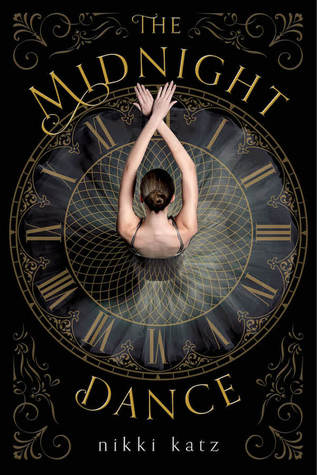
The Midnight Dance by Nikki Katz Review

WARNING: THERE MAY BE SPOILERS BELOW

Someone stands behind me... a deep breath near my ear... cold fingers brush the skin of my bare shoulder and pull my braid to the side... a soft touch of lips on my neck... followed by both hands circling like a noose... fingers reach to nudge my chin up... a whisper... 'stand proud, darling, you're mine, always mine.'”- The Midnight Dance, Nikki Katz
When the music stops, the dance begins.

Seventeen-year-old Penny is a lead dancer at the Grande Teatro, a finishing school where she and eleven other young women are training to become the finest ballerinas in Italy. Tucked deep into the woods, the school is overseen by the mysterious and handsome young Master who keeps the girls ensconced in the estate – and in the only life Penny has never known.

But when flashes of memories, memories of a life very different from the one she thinks she’s been leading, start to appear, Penny begins to question the Grand Teatro and the motivations of the Master. With a kind and attractive kitchen boy, Cricket, at her side, Penny vows to escape the confines of her school and the strict rules that dictate every step she takes. But at every turn, the Master finds a way to stop her, and Penny must find a way to escape the school and uncover the secrets of her past before it’s too late.

Last year, one of the books I was looking forward to the most was a book called Glitter by Aprilynne Pike, purely because the plot sounded so awesome (and the cover was absolutely gorgeous) I couldn't bring myself to pass it up. Nikki Katz's The Midnight Dance reminds me of that book. Both books are basically uncategorizable. I mean, Glitter is a science-fiction-y futuristic novel with both fantastical and historical elements. The Midnight Dance is steampunk-y, kinda historical fiction with some thriller elements thrown in there, too. The difference between the two books is that with Glitter, I knew what I was getting myself into. With The Midnight Dance, I thought it was a contemporary with an added thriller aspect, because that's what Goodreads led me to believe. So it was a shock when the first chapter started out with 1859 under chapter heading. And I was even more surprised when the main narrative opened in the year 1879. Wait, is this historical fiction? I said to myself, pleasantly surprised. I mean, sure, it was Victorian historical fiction, which admittedly isn't my favorite thing ever, but any historical elements added to a story always makes it better (so says the history major). 

Which made it all the more disappointing when there was very little historical fiction parts at all. Katz has this very abstract, likely fairy-tale influenced view of the 19th century and it's apparent in the book. I mean, if you're going to set your book in a time period other than the present, at least do some goddamn research. Not only that, she gave us a specific place and time, which was Italy. Italy during the years 1859-1879. And yet, not one mention of the Italian unification, lasting from 1848 to 1871. There were also lots of abstract descriptions of things like dresses and mentions of courts, and even a ridiculously attractive Prince showing up, Prince Jacobus (there was never a Prince Jacobus of Italy; that's not even an Italian name), and it was around that part that I thought maybe this was a retelling of... something. The Twelve Dancing Princesses, maybe? But that might be a reach, especially because of how little the bare bones of both stories have in common. But there is a fairy-tale quality to the book, albeit a very manufactured one.

The main issue with the book, though, is not the historical yet lack of historicalness setting, it's the characters. They aren't very good, for starters. There was a sort of specialness of Penny that I hated, and both her and Cricket bogged down the plot greatly. They just weren't all that likable or even interesting. Also, just a little nitpick, but Penny's name annoyed me from the get go. Penny's not an Italian name. Penelope's not even an Italian name. You couldn't even pronounce it in Italian, or at least not easily. Peh-neh-lo-peh (four years of high school Italian, baby). Her name stuck out to me, especially since most of the characters had traditional Italian names- Bianca, Maria, Cecilia, Nella, even Tatiana (Ana is close to a proper Italian name, but it should be Anna). Yes, I think about things like this. I don't have a social life.

There's also very little about ballet in here. Which is disappointing to say the least. I love reading about ballet. Also, the only Italian bit besides the setting is the food, which seems lazy and stereotypical.

I suppose that if this book is anything, it's steampunk. Of course, I could be way off the mark here since the closest I've ever come to steampunk is reading, yes, my beloved Marina, but the plot is pretty close to what I imagine steampunk to be, with a Victorian setting and Bioshock-like "body horror" (it's tame stuff, though). In fact, it reminded me of this middle grade horror novel I read last year called Broken Dolls. But at the same time, it doesn't embrace its steampunkness like the above books did. It doesn't go the extra mile to craft what could be a great, spooky, Gothic horror novel just in time for Halloween. I mean, the plot is just screaming for some like Carlos Ruiz Zafon to get a hold of it. In case you can't tell, I'm imagining Marina in an Italian ballet school and it's wonderful. Instead, Katz attempts to keep the book ground in reality, but not in a way that works in its favor. In the end, I couldn't suspend my disbelief enough to get into the story, the way I could for books like Marina or even Glitter. Instead, I kept questioning things, like why Tatiana's hair was blue (the explanation is priceless: apparently, Tatiana needed a lung replacement and that turned her hair blue. Someone, please tell me that's actually a thing). 

The pacing felt off, too. I never thought I would say this but this should have been a slow-burn of a book. It should have started out a lot slower, maybe made it so Penny didn't stick out right away as the girl who was different from all the other girls, the one who hated pink and ballet and rebelled against the system. As is, the book felt kind of juvenile. 

In the end, The Midnight Dance is one of those books where I didn't hate it, but it didn't know what it was or what it wanted to be. A steampunk horror novel? A retelling of The Twelve Dancing Princesses? Historical fiction? A thriller? It's not nearly trashy enough to be as guilty pleasure fun as Glitter was and it's not well written enough to be a Marina-esque Gothic novel. It wasn't even enjoyably bad enough to be another Violet Grenade, another book that blends fantasy elements with a real world thriller novel. I wasn't as hard on the book as I might have been a month ago, but I don't think I'd reread it any time soon.

4.5 out of 10

If you liked this book, you may also like:
Saturday, October 14, 2017

Manhattan Beach by Jennifer Egan Review

WARNING: THERE MAY BE SPOILERS BELOW

The old man leaned forward and took a long breath. “I see the rise of this country to a height no country has occupied, ever,” he said quietly. “Not the Romans. Not the Carolingians. Not Genghis Khan or the Tatars or Napoleon’s France. Hah! You’re all looking at me like I’ve one foot in the funny farm. How is that possible? you ask. Because our dominance won’t arise from subjugating peoples. We’ll emerge from this war victorious and unscathed, and become bankers to the world. We’ll export our dreams, our language, our culture, our way of life. And it will prove irresistible.”- Manhattan Beach, Jennifer Egan
Manhattan Beach opens in Brooklyn during the Great Depression. Anna Kerrigan, nearly twelve years old, accompanies her father to the house of a man who, she gleans, is crucial to the survival of her father and her family. Anna observes the uniformed servants, the lavishing of toys on the children, and some secret pact between her father and Dexter Styles.

Years later, her father has disappeared and the country is at war. Anna works at the Brooklyn Navy Yard, where women are allowed to hold jobs that had always belonged to men. She becomes the first female diver, the most dangerous and exclusive of occupations, repairing the ships that will help America win the war. She is the sole provider for her mother, a farm girl who had a brief and glamorous career as a Ziegfield folly, and her lovely, severely disabled sister. At a night club, she chances to meet Styles, the man she visited with her father before he vanished, and she begins to understand the complexity of her father’s life.

Mesmerizing, hauntingly beautiful, with the pace and atmosphere of a noir thriller and a wealth of detail about organized crime, the merchant marine and the clash of classes in New York, Egan’s first historical novel is a masterpiece, a deft, startling, intimate exploration of a transformative moment in the lives of women and men, America, and the world.

I have been wanting to read a Jennifer Egan book for some time now- A Visit From the Goon Squad has been on my list since I read Please Kill Me, actually- but it was Manhattan Beach that finally lured me in, because, even though it was WWII historical fiction, I had faith that it would be one of the more original additions to that particular bloated subgenre. Also, I miss historical fiction- too bad it's been horribly uninspired lately (2018, on the other hand, has been really looking up- January's going to be a busy month for me!). However, I can see why Manhattan Beach has been getting such bad ratings.

This is without a doubt a 4.5 (two star) book for me. Not because I hated it- it wouldn't even make my least favorites of 2017 list- but because it just wasn't that good. Too much was going on, and I was often confused by what was happening. Characters were added with little warning or clarification as to who they were and I think Egan just wanted to do way too much with the book that she never took a step back and said, okay, this is what's important to the plot. Like, we have the gang thing, and then the diving, and then the war, and the thing with Lydia, and Anna's father's disappearance and we have Anna's individual drama and there's just way more going on then there has to be. If I were Egan, I would make it exclusively about the dock working and gang stuff during the Depression, because those were the best (if somewhat confusing) parts of the novel. They were by far the most original ones, by the way. Anna's story-line during WWII was pretty generic women's fiction (think Kristin Hannah) type stuff. Not my favorite, but then again I generally avoid women's fiction so of course I wouldn't like those elements. 

The Lydia parts felt completely superfluous and were pretty obviously added in for the sake of drama. I wished those parts had been cut out, though I admit they do serve one very specific purpose, and that is to give the father a reason to want to work for Styles.

I felt little towards any of the characters. Anna was pretty bland, your basic historical fiction heroine, her father was interesting but kind of lost in the mix, as was Dexter. I think the characters were the biggest causalities of the pinball points of view that Egan employed to tell the story- by the time I got comfortable and made sense of one point of view, the book would jump to another POV with a whole different story attached and I would have to repeat the process all over again. 

An interesting contrast to Manhattan Beach is the shining star that is The Tsar of Love and Techno. The latter may be a collection of short stories and not a novel, but it feels more like a novel because of how connected each story is, despite how different the plot lines are for each. Manhattan Beach, on the other hand, feels more like a collection of short stories jumbled together to create one large novel. The ending come together is unsatisfying, especially given how hard it was to follow the book.

This all being said, I have not been deterred from my wanting to read another Jennifer Egan novel, with A Visit From the Goon Squad still being the most tempting (and probably safe choice: aging punks in the Bay area? Sign me up!)- though frankly, all of her books are really tempting; they all sound like something I would at least like. Hopefully this was just a fluke thing, though maybe not- she seems to be a very divisive author given that half her Goodreads reviews are five stars and the other half are 1 or 2 stars. But you know, only one way to find out!

4.5 out of 10

Wednesday, October 11, 2017

Things I'm Seeing Without You by Peter Bognanni Review

WARNING: THERE MAY BE SPOILERS BELOW


I'm scared of living my short short life wrong in every possible way. I'm scared I've already made so many mistakes and I don't have enough time to fix them.”- Things I'm Seeing Without You, Peter Bognanni
Seventeen-year-old Tess Fowler has just dropped out of high school. She can barely function after learning of Jonah’s death. Jonah, the boy she’d traded banter with over texts and heartfelt e-mails.

Jonah, the first boy she'd told she loved and the first boy to say it back. 

Jonah, the boy whose suicide she never saw coming. 

Tess continues to write to Jonah, as a way of processing her grief and confusion. But for now she finds solace in perhaps the unlikeliest of ways: by helping her father with his new alternative funeral business, where his biggest client is . . . a prized racehorse?

As Tess’s involvement in her father’s business grows, both find comfort in the clients they serve and in each other. But love, loss, and life are so much more complicated than Tess ever thought. Especially after she receives a message that turns her life upside down.


I cannot believe that this book was written by the same guy that gave us The House of Tomorrow. Just. How.

I guess he realized that well-written, unique, and literary YA novels weren't great money makers so he decided to become another discount John Green. Guess it's unfortunate for him that this was the year Green broke his five year writing hiatus with Turtles All the Way Down coming this very month actually (no, I'm not going to read it because my masochistic tendencies are just that- tendencies). 

The main reason why I wanted to read this book was because I stumbled upon it after reading The House of Tomorrow and decided, eh, what the hell. I was initially a little turned off by The Fault in Our Stars comparison, but figured that he would surpass my expectations the same way his debut did. And the funeral home angle. Yes.

Things I'm Seeing Without You is basically your typical YA quirky teen book with a certain falseness to it. Our main character Tess Fowler reminds me of other quirky teenage girl protagonists that are clearly written by male authors, like HazelGraceLancaster or Mary. Iris. Malone. Look okay, many male authors write really great female protagonists, in fact, I think men write teenage girls better then women write teenage guys as a whole, but in this case, it was obvious that Bognanni has no experience with teenage girls other than from books like Mosquitoland

While it is true that the summary is very... John-Greenish... I wasn't too turned off by it because again, I was going on my prior Bognanni experience with The House of Tomorrow, and that novel may have had a very unusual even quirky setting and premise yet ended up being done very well. It didn't work nearly as well here. Instead, it just came off as being a bit too try-hard, with the Quaker School and the whole constantly talking about pot and just the character of Tess. Also, her online boyfriend was a bit too much like a John Green boyfriend, with the whole calling Tess by her first and last names.

There were a lot of throwaway moments like the actual funerals- I wonder if Bognanni kept changing his mind as to what book he wanted to write and just kept adding to it. In fact, I wished that Bognanni just focused on one thing, because certain parts made me feel like I was reading a book that was crafted from a story told by a little kid- And then they have a funeral for a horse! And then then an old lady hires them for a living funeral! But wait, the old lady dies in a freak accident so it turns into an actual funeral! And then.. and then... That kind of aimlessness that is frustrating to read, not because it's complex but because the author is forced to rely on a lot of contrivances to write his way out of the story arc he decided to abandon.

Also, what is up with this new trope of teenage characters just hopping on a plane without the parents' knowing? I hate it (fuck you Everything Everything for that I guess). It's unrealistic and irresponsible on the part of the teen and just idiotic. It's like a symbol of the impulsive selfishness that makes people hate teenagers. That's a bit dramatic but that's how much I hate this trope.


So is there anything I did like about this book? It's decently written. The meditations on grief were, while cliche and typical for a YA funeral home book or just one on grief in general, decent enough. It had some really great descriptions of Italy. And despite my bitching about the many different plotlines, I did kind of like the realisticness of how not everything ever works out. Likely it was the only realistic thing about the book. 

I mean, it was one of the better The Fault in Our Stars knock-offs. I'd put this book in the same place as The Invisible Life of Ivan Isaenko. I didn't love it, but in comparison to other John Greenish books like Mosquitoland or All the Bright Places I didn't want to throw this book off a cliff. As far as funeral home books go, I'd skip this or at least put this on least priority list. It's not on par with books like The Dead I Know or The Boy in the Black Suit (review coming soon btw). Another disappointing new release.


Saturday, September 30, 2017

The Language of Thorns by Leigh Bardugo Review

WARNING: THERE MAY BE SPOILERS BELOW

“Bad fates do not always follow those who deserve them.”- The Language of Thorns, Leigh Bardugo
Love speaks in flowers. Truth requires thorns.

Travel to a world of dark bargains struck by moonlight, of haunted towns and hungry woods, of talking beasts and gingerbread golems, where a young mermaid's voice can summon deadly storms and where a river might do a lovestruck boy's bidding but only for a terrible price.

Inspired by myth, fairy tale, and folklore, #1 New York Times–bestselling author Leigh Bardugo has crafted a deliciously atmospheric collection of short stories filled with betrayals, revenge, sacrifice, and love.

Perfect for new readers and dedicated fans, these tales will transport you to lands both familiar and strange—to a fully realized world of dangerous magic that millions have visited through the novels of the Grishaverse.

This collection of six stories includes three brand-new tales, all of them lavishly illustrated with art that changes with each turn of the page, culminating in six stunning full-spread illustrations as rich in detail as the stories themselves.

Despite not liking fantasy all that much, I like Leigh Bardugo. But this was mostly a miss for me. I mean, I'm definitely going to be in the minority here because I'm sure most fans eat this kind of stuff up with a soup spoon, but this is probably a case of "it's not you it's me". Looking back, I don't even know why I preordered this let alone bought it in the first place. As I said in my Cinder review, I like fairy tales, but not so much that I want to read retellings or modern updates of the tales that have so much history behind them and are wonderful windows in the time they were created in, a time when you could scare the shit out of children with stories of wicked stepmothers and cannibalistic witches and at the end of the day, still have the good prevail. It says something about the things people dreamed of and the influences of things like romanticism or religious morality at the time of the Brothers Grimm and Hans Christian Anderson. Perhaps that's one of my problems with this collection- the stories have no history behind them, thus I cannot really see a point in their existence. This probably has to do with the fact that I am no longer a child and do not read fairy tales for entertainment any more, I read them for the reasons above. Blame my history major on that. 

And yes, when I say modern versions of fairy tales, this is basically it. With the exception of a couple, the fairy tales in this book are basically the same old stories just told with a "grittier" feminist edge. It gets repetitive really quickly. The man is always a villain, the prince is evil, the female characters are kind and good, etc. That's a very common thing to do in fairy tale updating, by the way, and one that I've never been too keen on. In a lot of ways, I was reminded of the stories told in A Monster Calls, but without any of the substance that those stories had. In the end, I found most of them mediocre and rather boring. And kind of confused, with the references to sexual abuse and just plain old sex. Fairy tales are written for children, thus fairy tale like stories like this should be free of that stuff, because it just kind of takes you out of that nostalgic feeling. 

Of course, maybe this book was just doomed from the start, because spin-offy books like this have never really worked for me. Even the Unwind anthology UnBound was a bit of a disappoint! That being said, I probably would have liked it better if it was just stories or mythology or the history of the Grishaverse than just rehashings of the same old tales. Like if it followed famous saints or kings and queens or grisha. Something new and different as opposed to another Little Mermaid retelling.

The only two things that did anything for me were both the loveliness of the prose- Bardugo can really write- and the wonderful illustrations (also the fact that it is a genuinely pretty book). Even those two things though couldn't save this book. In the end, though it's purely personal preference and I love Leigh Bardugo's work and will still continue to support her by reading her books, but this was, again, a solid miss for me. Maybe I'm just too old for fairy tales. Oh well. At least my younger cousin, who loves both Six of Crows and the Grisha trilogy has a birthday tomorrow so my money hasn't entirely gone to waste.

5 out of 10

Monday, September 11, 2017

The Rattled Bones by SM Parker Review

WARNING: THERE MAY BE SPOILERS BELOW

“But I think this island holds more history than the university could ever uncover. And there are endless ways for secrets to slip out into the world.”- The Rattled Bones, SM Parker
Unearthing years of buried secrets, Rilla Brae is haunted by ghostly visions tied to the tainted history of a mysterious island in this haunting novel from the author of The Girl Who Fell.

Maine-bred, independent Rilla Brae is no stranger to the deep. She knows the rhythms of hard work and harder seas. But when she experiences the sudden death of her father, the veil between the living and the dead blurs and she begins to be haunted by a girl on a nearby, uninhabited island. The girl floats a song over the waves, and it is as beautiful as it is terrifying. Familiar and distant.

Then Rilla meets Sam, a University of Southern Maine archeology student tasked with excavating the very island where the ghostly girl has appeared. Sam sifts the earth looking for the cultural remains of an island people who were forcibly evicted by the state nearly a hundred years ago. Sam tells Rilla the island has a history no locals talk about—if they know about it at all—due to the shame the events brought to the working waterfront community. All Rilla knows for sure is that the island has always been there—an eerie presence anchored in the stormy sea. Now Sam’s work and the ghostly girl’s song lure Rilla to the island’s shores.

As Rilla helps Sam to unearth the island’s many secrets, Rilla’s visions grow—until the two discover a tragedy kept silent for years. And it’s a tragedy that has everything to do with Rilla’s past.

Normally, when I dislike the book, I dislike all sorts of things by it, the plot, the characters (especially the characters), hell, usually the writing is the thing I have the least problem with. Not in this case. Okay, the characters weren't the best, but the writing was just... bad.

The annoying thing about the writing is that it could almost be actually kinda good. And I tried to see that. But there's just something about it that just grated me. The writing is, well, a lot of things. It took me quite a lot of reading to figure out exactly what offended me so much about it. And then it hit me. I think the problem is that Parker doesn't know how to transition from one action to another, so it sounds kind of stilted and choppy, and that combined with the elaborateness of the sentences she's writing makes for a very debut-y writing style. This would be fine, EXCEPT SHE'S NOT A DEBUT AUTHOR. This is kind of a good example of what I'm talking about: "I'm grateful when the doorbell announces Brenda Sherfey on the step offering tuna casserole and condolences. I abandon Brenda's food to the counter because the fridge is already crammed with sorrow."
I also got a bit of a paranormal romance novel vibe, though I'm not quite sure why, especially since I've only ever read a grand total of one paranormal romance novel. 

Parker also does little annoying things, like narrate every action, make everything sound overly dramatic as if every little things has a deeper meaning, and, the most annoying thing out of all of it, stating the obvious. Like in this case: "His words confirm that he's 'from away'- a transplant to our state." No shit, I got that because the sentence before he commented about the directness of Mainers. If I said I like how nice people from the Midwest are, would you think I was from the Midwest? No, of course not. I despise it when people waste words. 

In fact, the writing reminds me of a point and click game, or more specifically, one of those Her Interactive Nancy Drew games. I was have expecting some sentence like "I jiggle the door handle. It's locked." to turn up at one point. Actually, if I'm mimicking her writing style, it'd probably be something more along the lines of: "I jiggle the door handle. It won't open. It's locked.". Look, okay, I have a strong nostalgic connection the those games. My sister, best friend at the time, and I all used to crowd around my sister's laptop or one of our two old desktops on some Saturday afternoon back in middle school and play them. I think we only ever actually finished one or two of them, but we still loved them. But that doesn't necessarily mean the narrative style of the games translates well over to print media.

One last point about the writing. I think Parker really needs to stop adding over the top metaphorical imagery to every goddamn sentence. Like this one: "I felt a shiver crawl up the ladder of my spine". Sure, if it had just said "I felt a shiver crawl up my spine" I might have thought it cliche, but I wouldn't hate it. For some reason, the addition of the ladder just irritated me. It still doesn't make it original, and just adds unnecessary weight dragging the sentence down. She really can't leave well enough alone, can she?

So what else is bad about it? The characters are extremely unoriginal. Rilla is your typical Strong Independent Womyn, who comes from a long line of Strong Independent Womyn- including her grandmother, who somehow managed to be a voluntary single mother despite growing up in a time where voluntary single motherhood was not a thing. Sam is like a watered down Augustus Waters, one who doesn't have a romantic attachment to Rilla. He's passionate about things, gives long, poetic speeches, and has quirky exchanges with our main character. He's also basically the personification of the male version of the much-hated Not Like Other Girls trope. Rilla constantly reminds us how he's Not Like Other Boys, he apologizes for interrupting her, he doesn't sit too close to her, he's smart and driven, and forgive me for saying this, but it seems very sexist. Like, a lot of people complain about how sexist the Not Like Other Girls trope is, because it puts down other women or whatever. The Not Like Other Boys is kind of like that, but in a different way, painting men as being idiotic, macho pigs, but not Sam because he's a gentleman. If you are going to condemn one, you must also condemn the other. 

There's other cliched characters, the wise, old, and spiritual grandma (where do all these wise old grandmas come from? Most of the sweet old ladies I know do things like go to church every Sunday, talk about their grandkids, and make sure nobody leaves before they've all gained at least ten pounds), and the old stodgy villain, who goes by the name of Old Man Benner because this is a bad mystery novel, we need a sexist old codger. There's also, in a nice change of pace, a dead dad and a missing mom instead of the opposite. This would be better if the mom's leaving wasn't excused. Interestingly, she seemed kind of unaffected by both. Frankly, if she didn't always explicitly always remind us how much grief she felt, I wouldn't have known at all that she felt any. In fact, the author is so bad at showing things she has to tell us things directly because if she didn't, I would think Rilla is either a robot or a sociopath.

All of this is a shame, because the plot really was a good one. The island of Maluga was an interesting place to set a book, and one with a fascinating history. If Parker had been a more original character creator or a much, much better writer, this book could have really shone. In fact, it probably would have reminded me much more of the Her Interactive Nancy Drew games. I kind of wish it was, called something like the Ghost Girl of Maluga Island because that would have been way more fun than this book ended up being.

2.5 out of 10

Friday, August 18, 2017

Girl in Snow by Danya Kukafka Review

WARNING: THERE MAY BE SPOILERS BELOW

“Nostalgia is my favorite emotion. It’s like, you think you know how to deal with the passage of time, but nostalgia will prove you wrong. You’ll press your fact into an old sweat shirt, or you’ll look at a familiar shade of paint on a front door, and you’ll be reminded of all the time that got away from you.”- Girl in Snow, Danya Kukafka
Who Are You When No One Is Watching?

When a beloved high schooler named Lucinda Hayes is found murdered, no one in her sleepy Colorado suburb is untouched—not the boy who loved her too much; not the girl who wanted her perfect life; not the officer assigned to investigate her murder. In the aftermath of the tragedy, these three indelible characters—Cameron, Jade, and Russ—must each confront their darkest secrets in an effort to find solace, the truth, or both.

It's no secret that I haven't been impressed with my "most anticipated" releases this year. From the disappointing The Roses of May to the laughably bad Violet Grenade to the even more disappointing The Gentleman's Guide to Vice and Virtue, I haven't been having much luck with the books I was actually planning on reading this year. And yet it's ironic that the one I've probably liked the most- this one- is the one that, as much as I wanted to read, I was preparing myself for disappointment. The reviews were all three stars give or take a half a star. And, ironically, perhaps preparing myself for disappointment is exactly what I needed to do the whole time, because I found myself pleasantly surprised by the book, much the same way I found myself pleasantly surprised by Night Film despite finding that novel under less than flattering means.

First the good, because there is a lot of it in this novel. Kukafka is a very good writer and I genuinely am excited to see where she goes next, because with a little more practice her writing can shine in a very Cormac McCarthy way. Her prose here reminded me of his prose in The Road, though I do prefer the writing in The Road. She was a little more verbose, and I had a hard time getting behind some of her characters' thoughts, feelings, and observations, which for me sometimes bordered on over the top and seemed unrealistic. However, I admire her restraint when it comes to things like dialogue; for the most part her characters spoke realistically and any obnoxious John Greenish monologues were appropriately absent. It was realistic that these deep, inner thoughts were confined to the mind and not spoken out loud except by accident, though I admit I would probably hate any of Jade's screenplays if they actually became movies. 

The characters were gripping too, and each were wholly unlike any other character I've encountered before. Well, that's an exaggeration, and now that I think about it I don't think it was necessarily the characters themselves that were original, I think it was the way that they were written. I'm not going to call them realistic, but you know what, I think I would end up disappointed if these characters were realistic. The book had a kind of mystical quality surrounding it that I really enjoyed, an almost unintentional one and I think a lot of that had to do with her lovely writing. It was an effortless, almost accidental mystical aura, one that many books (Pointe, Claw comes to mind) try and fail at. And, despite the outside world being mentioned, the town kind of had this snow globe-like feel to it, that I really enjoyed. Of all the characters, I think I liked Cameron the best, but frankly I don't really think I liked anyone all that much. They were fascinating to read about, though, and I had a hard time putting this book down at points.

All that said, I did think this book lost the plot for a while there and kind of got off track as a result. When that happened the beautiful prose got tiresome, and I wished that the editor had told her so. And while I did like how Lucinda always kind of had this flat presence to her, it was great commentary about how you never really know anyone, I wished she had more of a major presence in the novel. I got the feeling after awhile that it was somebody else's idea to have her write a thriller and she wasn't really too happy about it, but went along with it because character studies aren't really a big thing anymore. Eh, I don't know. All I do know is, if you were looking for a Paula Hawkins or Gillian Flynn thriller, this ain't it. I suppose that this type of mystery is more of a Tana French-type, though take away the police procedural elements. Which is disappointing and bears repeating- even though a cop is a main character, do not expect a police procedural.

The real reason, however, for the 7-7.5 is because of the ending. The ending was not very good, to say the least. Before, I was all set to give it an 8 or even 8.5. I said before I am an ending person, and this was an insult, to say the least. An out of left field character coming in last minute to put the blame off any of the other characters? No real motive for the murder except an affair? Come on now, that's cheap. Not to mention I really grew to hate Russ' story arc. While I was happy he kicked his cheating bitch of a wife out (I have no sympathy for cheaters, and I really grew to hate Ines by the end of the book) I wish he hadn't quit the police department and the whole "villainous police" thing felt tacked on. I didn't really understand why everyone hated Lieutenant Gonzales or Detective Williams when neither of them seemed like they did anything wrong, and there wasn't really a reason why he quit, he just kind of did it and acted like we were supposed to cheer him on. And I hated Ivan, even though I was supposed to like him. While normally I do believe in the moral greyness of people, I don't reject the idea of evil. Because frankly, there's a lot of evil in this world, mostly consisting of people who do anything to children. That's not me being a blind, bigoted puppet, that's just the only word I can think of to describe people like Adam Lanza or the person that bombed the Ariana Grande concert or the guys that did the Cheshire home invasion (the one time I've ever been mad at the overturning of a death sentence and the thing that solidified my intense dislike of the ACLU- their comments after the overturn made me think rather unChristian thoughts). It got to the point where at the end of the book I wished Ivan actually did it. 

That wasn't the only way the ending was disappointing. The characters kind of complained about their lives for most of the book and then suddenly everything was fixed? I also noticed that every time Kukafka doesn't know what to do with a character she makes him into a villain for no apparent reason. Like Cameron's friend Ronny. Or the killer. It didn't strike me as the best way of telling a story.

But as a whole, I did enjoy the book and wished I could give it a higher score than I did. Unfortunately, too often in the final quarter, mystery novels blow up for me, and this one is no exception. However, I am happy to keep it at a relatively high score, and am excited for her sophomore novel. I will be definitely watching Danya Kukafka, hoping that her books go someplace I like. 


7-7.5 out of 10

Monday, July 17, 2017

The Gentleman's Guide to Vice and Virtue by Mackenzi Lee Review

WARNING: THERE MAY BE SPOILERS BELOW


“We're not courting trouble...Flirting with it, at most.”- The Gentleman's Guide to Vice and Virtue, Mackenzi Lee
Henry “Monty” Montague was born and bred to be a gentleman, but he was never one to be tamed. The finest boarding schools in England and the constant disapproval of his father haven’t been able to curb any of his roguish passions—not for gambling halls, late nights spent with a bottle of spirits, or waking up in the arms of women or men.

But as Monty embarks on his Grand Tour of Europe, his quest for a life filled with pleasure and vice is in danger of coming to an end. Not only does his father expect him to take over the family’s estate upon his return, but Monty is also nursing an impossible crush on his best friend and traveling companion, Percy.

Still it isn’t in Monty’s nature to give up. Even with his younger sister, Felicity, in tow, he vows to make this yearlong escapade one last hedonistic hurrah and flirt with Percy from Paris to Rome. But when one of Monty’s reckless decisions turns their trip abroad into a harrowing manhunt that spans across Europe, it calls into question everything he knows, including his relationship with the boy he adores.


Remember how I said that Life: An Exploded Diagram is historical fiction for those who love history? Well, The Gentleman's Guide to Vice and Virtue is the opposite of that.

Okay, I'm being mean. But if you actually enjoy history and are expecting to harvest any new knowledge about the 18th century, don't pick this one up. If you want a decadent tour of Europe long before two world wars ravaged it don't pick this up. If you want gorgeous descriptions of 18th century architecture, dress, or art don't pick this one up. Basically, if you want historical fiction at all, don't pick this one up.

Well, I'm being a little harsh here. But in my defense, I wanted an 18th century version of The Luxe, dammit (Anna Godbersen, get on that please). I wanted fun, brain melting trash with tons of pretty dresses and a cute gay romance. I wanted lighthearted adventures around old world Europe. And for the first 100 or so pages, that's what I got.

Well, kind of. Right away, there were far too many tropes that I cared for in both historical fiction and regular contemporaries. The asshole dad, for one. That's one trope I'm fucking sick of, to the point where whenever I see it, that book doesn't have a chance in hell of getting a five star rating. Lazy goddamn writing. Also, can I just say that people hit their children back in the 1700s and it wasn't nearly as big of a deal as Lee treated it to be. She is committing the cardinal sin of inserting modern morals in a non modern (or Early Modern) society and that pissed me off. I don't care if you don't agree with it, that's how things were done back then and we can't fix it now. 

But I'm getting ahead of myself. I could have dealt with a few tropes if the book ended up being as fun as it seemed for the first 100 pages. I mean, sure, would I have wanted a few more descriptions of Paris or other beautiful European cities, most definitely. In fact, the lack of descriptions made me nervous- how can Lee write a book about a Grand Tour of Europe and not write about the cities? Or the clothing! I get not everyone's as into historical clothing as I am, but that's a must for any fun fluffy historical fiction book. 

But then, after 100 pages, the book seemed to take a strange, messy turn. It seemed that Lee suddenly got bored with the book she was writing and just decided to start winging it. I didn't have a problem with it taking on a more action-adventure vibe until we got to Barcelona and a little voice in the back of my head said "Isn't this just like Marina?" And of course, I started comparing the two and I'm sure you could guess which came out on top. Marina just did that whole Frankenstein-esque plotline so much better than this book, and, hell Marina even did city descriptions 110% better than this book and it wasn't even about a goddamn journey around Europe. Marina made me feel like I was in Barcelona, one of the most beautiful cities in the world, in this book Barcelona could have been Naples, for all I knew. It made me wonder if Lee has ever even left the United States, though her author biography seems to claim otherwise.

Not to mention, the writing declined in quality after the first 100 pages. While I wasn't in love with the style at first- thought it was a bit try-hard- I still thought it was nice that Lee tried to mimic the way people spoke back then- she did it in a very cliche manner, but I could have dealt with it. Instead, as the book progressed the narrative sounded more and more like a contemporary, again making me think the writer lost interest in the book she was writing or decided it was too much effort. In that respect she reminded me of the way Katherine Longshore writes, a dissonant blend of anachronisms and historical vocabulary. The word sloppy came to mind, unfortunately.

But what about the characters? Cliche. For one thing, both Monty and Percy were obviously written by a woman. Monty had the potential for interestingness, with his rakishness, but he fell too much on his rather trope-y background for that. Also, at times he struck me as Lee trying her best to make him into a lovable rogue, on pare with Jack Sparrow, but it didn't work too well. Percy was another potential, but in the end his character turned too much into the token for me to truly like him- I mean, with the exception of his love of music, his three defining character traits- gay, biracial (black), and epileptic- all seemed included for the sake of inclusiveness and thus he didn't seem like a real individual, and frankly it was made even worse by Lee's decision to use first person. Which is a damn shame. It kind of made me want to write a character with those three traits though, and see how much fun I could have with them. Felicity was a cliche and one that I have particular hatred for. You know, the badass, knowledge-obsessed, bookish, ahead of her time historical fiction heroine? I do, unfortunately. I had some hopes for her, too, when she was shown at the beginning of the novel reading "romance novels". I was hoping she would be original, a girl who might be a bit frivolous and someone who maybe even loves fashion and romance and all that, but is still smart and knows how to get what she wants. I mean, this is the 18th century. Women may not have been allowed to have a ton of education, but they could have plenty of power if they knew how to get it. The courtesans in the Sun King's court, for instance, were some of the most powerful women in France because of their close connections to the king. Unfortunately, Felicity's character fell too much back on typical tropes of what a strong female character is, and suffered as a result. And I think my least favorite parts of both these characters is that they could have played the perfect straight men to Monty's antics, but instead every time they would lecture him- and have really good points, too- they always started going on and on about how their lives are so much worse than his. Which got real tiring after a while, because the "who has the worse life" pissing contest could go on without end, especially in historical fiction. 

I also felt many things could have been taken out for a more concise narrative. The pirates, for instance, had no real point and easily could have been taken out. Also, they were more romanticised than the goddamn Pirates of Caribbean. Look, I love pirates, but regardless of their race, they were shit human beings who thought nothing of killing women and children and sinking ships for a quick buck. For an author who seems so against the romanticisation of anything in history, I was surprised she made that mistake.

The ending was also stupid and again, unrealistic. I think it would have made for a much better ending if all the characters were forced to confront reality, if Percy had gone to Amsterdam and Felicity to her finishing school and Monty had to take over his father's estate. Sure, it would have been sobering, but ultimately realistic and would have been more in line with the realistic view of the time period Lee had been trying to portray, somewhat. But of course I can't really fault her too much for the fairytale ending, given that this is fluffy historical fiction you probably aren't going to read for a history lesson etc etc etc. 


What I wish is that Lee had given us a specific year. Saying the 18th century isn't enough. A lot went down in the 18th century, from the rise of world powers Prussia and Russia, the increasing colonization of the New World, the Second Hundred Years' War (fought in a series of wars that all boiled down to France vs Britain, including the War of Spanish Succession), the Scientific Revolution, the Age of Enlightenment, the Financial Revolution and beginning Industrial Revolution in Great Britain, and the revolutions by the end of the century. So a lot of shit went down, and the only war Lee really mentioned was the War of Spanish Succession, because she had to insert watered down European politics in there somehow. She also talked a bit about the Scientific Revolution, in the form of Felicity but then started going on and on about alchemy. A King Louis was mentioned, but King Louises ruled France basically the entire century, until, you know, Robespierre and Napoleon and all that. Anyway, in the book King Louis is mentioned as being sick, but the Sun King died in 1715, which after reading the main text (but before the afternote, which cleared up some confusion) when I was trying to figure out all these dates it seemed like it would have been a good time for the book to take place, it being after the war of Spanish Succession and during the Golden Age of Piracy (which Lee mentions in her author's note in the back), since that ended in 1730. However it seemed like it had been some time since the War ended, and it ended in 1714. Lee also has a couple characters talk about Voltaire's exile in England, which wasn't until 1726 or 1728 (one of those years). The women's fashion at the ball at Versailles was also described as being over the top in a way it wouldn't have been until at least the 1750s. The only thing I'm sure about is that it was before 1770.

So where was I going with this lengthy rant about timeline? Oh yes, if Lee had actually cared about being factual, she would have given us a year. And yes, I consider that a must in historical fiction, because then I can pull in all kinds of fun facts about the context of the time period and all that jazz and the author could have gone into more specifics about the politics, art, scientific discovers and fashion of that particular year instead of giving us the vague overview she did. On the same note, hers is one of the few author's notes I've ever been disappointed in, because she didn't really give a ton of facts and didn't really seem that interested in it. I felt she put it in as a sense of obligation and not because she has any real interest in teaching others, or seemed like she just figured most would skip past it anyway. I mean, she did narrow the decade down to the 1720s, which does make a lot of sense but still, that should have been in the main text. I do, however, have one major correction- Alexander Hamilton wasn't mixed race. He did grow up in the Caribbean, but his mother was half Scottish or British (one of those) and half French Hugenot. While there are rumors, there is no evidence of him actually being of mixed race background and, hate to say it, but most of those rumors were probably started by his political opponents in an attempt to discredit him. Welcome to the 18th century, folks. Dumas, on the other hand, was indeed mixed race, so she at least gets half a point for that. 

I haven't read My Lady Jane, but feel like this book is inspired by that one, to some extent. Mostly the fantastical elements in this novel to show the politics of the time. While I'm sure it makes historical politics, much of it heavy and complicated, go down far easier, especially to a lay reader or someone not interested much in history, I don't really like it myself. And the history teacher in me is disappointed by the idea that people need fantasy to become interested in history, especially since the politics are truly fascinating on their own, even more interesting than the clusterfuck that is today's politics (and as an added bonus, you miss out on all the bitterness and resentment that comes with talking about today's politics! Though let me tell you something, you haven't truly lived until you've gotten into a heated debate over Trotsky vs Stalin). But as a whole, I didn't really like the politics parts anyway, because I felt like they were included just as a selling point and took too much away from the idea of a Grand Tour. I would have preferred it if she went the Cabaret approach and had all of this simmering in the background, coming up in the various salons or in the form of letters or newspaper articles during our group's travels around Europe.

I sound like I really hate this book, even though I don't. Sure, I wish Lee had made several other decisions writing this book and I wish she actually sat down and thought about what she wanted the book to be, but I suppose it was fun enough as is. And I admit, my expectations were too high (this was actually my most anticipated book of the year). I liked that it took place in the 1700s, one of my favorite centuries when it comes to fashion and art and politics (though I admit I'm not that into the Scientific Revolution or the Age of Enlightenment) and not WWII like so many other new releases. I liked that it was a male/male romance. I was hoping this book would remind me of Brideshead Revisited, at least loosely. 

That being said, this book was easy to lose myself in, and it inspired me endlessly, mostly to create my own version of it. And I did enjoy mentally revisiting Marina, and reminding myself how much I loved it and how much that book stayed with me even though I read it 4 months ago. And I admit, I do love it when a historical fiction novel of any kind gains any form of popularity, especially one with as unique and ambitious an idea as this one. For once, I'm actually excited to see the copy cats. So I can't really say I hate this book. In fact, maybe this book is exactly what this genre needs. For the past four years, historical fiction has fallen into a WWII rut and it needs to end. Hopefully, the popularity surrounding this book will open the doors for new, fun releases. But maybe I'm just getting my hopes up again.


6 out of 10

Sunday, May 28, 2017

The Roses of May by Dot Hutchison Review

WARNING: THERE MAY BE SPOILERS BELOW

“I carry the names of those other victims, but it's not from guilt. From sorrow, usually, and from rage. Our agents tried to protect us from the extra wounds that come with serial cases, but it isn't their fault that we're broken people who don't always react the way  we're expected to.”- The Roses of May, Dot Hutchison
Four months after the explosion at the Garden, a place where young women known as the Butterflies were kept captive, FBI agents Brandon Eddison, Victor Hanoverian, and Mercedes Ramirez are still entrenched in the aftermath, helping survivors in the process of adjusting to life on the outside. With winter coming to an end, the Butterflies have longer, warmer days of healing ahead. But for the agents, the impending thaw means one gruesome thing: a chilling guarantee that somewhere in the country, another young woman will turn up dead in a church with her throat slit and her body surrounded by flowers.

Priya Sravasti’s sister fell victim to the killer years ago. Now she and her mother move every few months, hoping for a new beginning. But when she ends up in the madman’s crosshairs, the hunt takes on new urgency. Only with Priya’s help can the killer be found—but will her desperate hope for closure compel her to put her very life on the line?

If you'll recall, I really loved The Butterfly Garden. It was creepy, it was intense, it was a crime novel, it just worked for me. So when I found out it would be a trilogy, and a second book would be coming out this year, I just sprang for it. 

Unfortunately, this book ended up only being alright. I didn't hate it, but I didn't love it.

I think the problem with this book was that it felt confused. It didn't know whether it wanted to be a sequel to The Butterfly Garden or a standalone/companion crime novel or a contemporary YA drama. This, combined with the bizarre without warning shifts in POV between first person singular and third person singular and second person singular made this book feel jumbled together. The transitions between these weren't smooth at all, and made for a jarring reading experience.

Which is a shame- I would have really loved this book if it was more focused. Because the idea behind it was fantastic- serial killer who kills one girl a year, and each girl is found surrounded by a different type of flower? I like that idea almost as much as the idea behind The Butterfly Garden

I mean, the writing wasn't the problem. Hutchison is honestly a very good writer, and I especially love the way she writes descriptions, making them seem so effortless. While I did cringe a bit reading from the killer's POV, as he sounded too stereotypical and even a bit like Clover from The Cellar, that part was my favorite part of the book- it was the only part that really intrigued me. Priya's parts got a bit boring, and I was annoyed that we had to keep following her, half the time wondering what made her so special and the other half wishing she would get killed off to give this book some needed action. The FBI agents bored me more than they should have had, and again I kept wishing that Hutchison just focused on this killer and not Eddison's (also, Eddison didn't really sound like Eddison in this book, don't really know why) "relationship" with Priya, which got real old real fast, or the butterflies. 

I suppose I should have been more happy they came back than I actually was. But I kept feeling like that storyline was over, and every time I saw Bliss and Inara again I just kind of rolled my eyes and sighed. Not to mention Priya was basically just like Inara. I think in trying to force this book into a sequel she lost a lot of what made The Butterfly Garden work so well. Perhaps the interview format in the first book with the kind of distant FBI agent would have worked better for this book, too. I felt like the killer in this book was second fiddle to everything else and wished I could get more invested in the mystery than I actually was.

Maybe also another problem is that only one victim was focused on way too much. I wanted to hear about the other girls, who were mentioned but not even given a blurb. They were far more interesting than Chavi, sad to say. 

But I'm still going to stick with this trilogy for the final book, probably with Mercedes Ramirez as the main FBI agent (though, was she in the last book? I don't remember). Hopefully, she'll go back to the roots (pun not intended) of the trilogy with it. Still, my hopes for this trilogy have been knocked down to middling if that.

7 out of 10