Sunday, April 9, 2017

Sekret by Lindsay Smith Review

WARNING: THERE MAY BE SPOILERS BELOW

I am a puppet on Rostov's strings, and I will pay for serving god and country, if god is Karl Marx.”- Sekret, Lindsay Smith
An empty mind is a safe mind.

Yulia knows she must hide her thoughts and control her emotions to survive in Communist Russia. But if she sometimes manipulates the black market traders by reading their thoughts when she touches their skin, so what? Anything to help her survive.

Russia's powerful spy agency, the KGB, is recruiting young people with mind-reading capabilities for their psychic espionage program. Their mission: protect the Soviet space program from American CIA spies. Why shouldn't the KGB use any means necessary to make the young psychic cooperate? Anything to beat the American capitalist scum to the moon.

Yulia is a survivor. She won't be controlled by the KGB, who want to harness her abilities for the State with no regard for her own hopes and dreams. She won't let handsome Sergei plan her life as a member of elite Soviet society, or allow brooding Valentin to consume her with his dangerous mind and even more dangerous ideas. And she certainly won't become the next victim of the powerful American spy who can scrub a brain raw—and seems to be targeting Yulia.

Sorry about the dearth of reviews this month so far. A combination of minor reading slump and illness, this particular one giving me pounding headaches that make it hard for me to actually concentrate on anything. Happily, with the help of my best friend, ibuprofen, I was able to both start and finish Sekret by Lindsay Smith in one afternoon.

First, I have to laugh at the Elizabeth Wein review on the back of the book calling this a dystopian, though I admit that a popular historical fiction author- and one that I not only like but also recommend to people- calling a book that takes place in the USSR in the 60s a dystopian is a little depressing. This isn't a dystopian. I guess it can be considered a historical fantasy, or maybe historical science fiction, take your pick. It reminded me a bit of The Girl Who Could Fly (one of my favorite books as a child) crossed with a 60s Cold War spy novel. 

I enjoyed the writing, for the most part. Some parts were nicer than others, and it could use some polish, but I can see the writing turning into something really nice with the next book.

But I admit, most of the Cold War spy novel vibes I got came from the plot itself, though I did wish that carried over to the writing, since I probably would have gotten much more atmosphere and would have loved it much more easily. In that respect, this novel suffers from its first person perspective. I personally would have gone with a third person/omniscient perspective. I was hoping for something kind of like the Covert Front flash game series that Mateusz Skutnik makes. 

I mean, Yulia was an all right main character. I was able to get on board with her and Valentin- though he did sound too good to be true-, and wasn't too bothered by the love triangle (by the way, I don't really understand most people's burning hatred for love triangles, since I was never that bothered by them. I suppose it's one of those things that people find trendy to hate, like the word moist). It was too obvious who Yulia would end up with, and most of the drama in that respect was just annoying. I did like how Sergei wasn't made into a villain, though. 

The most developed characters were Yulia, Valentin, the Hound, and Sergei. Masha and Misha were as interchangeable as they come, Larissa had some glimmers of interesting features, and I kept forgetting Ivan existed. Krusenko was interesting, but not fully developed, and Rostov read like a parody of a villain from a anticommunist American cowboy show from the fifties, like something Bill Bryson would have made fun of in The Life and Times of the Thunderbolt Kid

So what did I like, besides the writing? Well, the idea is fan-freaking-tastic. You all know I stay away from historical fantasy, but I couldn't resist. I liked the action. And I admit, when you're sick, it's nice to sit back and pick up a fun, action-packed novel where you know that the good guys will win and the bad guys will lose. It was perfect the perfect sit-back-turn-brain-off kind of book. I loved the setting, and I wish there was more of the everyday Soviet life present. 

A few questions/nitpicks I have before I conclude. The Goodreads reviewer Khanh (the Grinch) in particular criticized her timeline when it comes to music. Apparently, Smith was off on the release dates of the Western music mentioned. She seems more knowledgeable than I am when it comes to 60s pop, so I take her word for it. While I do casually enjoy 60s bubblegum, especially on warm summer days, my regular taste in music is far from that kind of stuff (I like old music from the 20s-40s, show tunes- especially cabaret/vaudeville style, punk music, and alternative, if you were wondering) so I can't comment on the accuracy of that. 

No, most of my questions surround her parents. Now, Yulia's parents apparently used to be good, high up Party members. However, Yulia frequently mentions her parents, especially her father, criticizing Stalin and the other leaders of the Party as being cruel tyrants, and Yulia also seems to have very negative views of the Party. This wouldn't be that bad, if she doesn't specifically mention that her father apparently held these views when she was young, back when they were still good Party members. Yulia's parents likely shouldn't have had those beliefs, especially since they were their most successful during Stalin's reign of terror, and they were also Georgian, and Stalin especially favored his fellow Georgians. They couldn't have taught their children about the hardships of communism- that was just asking to be discovered and shot. I thought her actual family life was done in a very confusing manner anyway. It also annoyed me that Yulia seemed to have absolutely no loyalty to the USSR, when it would have been much more realistic if she had at least some sympathy to the country, especially since it would have been ingrained in her through her schooling.

I did really like this book, though. I was what I needed to get me out of a sick slump- some fun, action-packed book. I can see myself really enjoying this duology- I'm already looking forward to Skandal. But what can I say, this book was made for someone like me to love. It's no masterpiece, but it works for me. I do really want to pick up Smith's serial The Witch Who Came in from the Cold with Max Gladstone, or at least whenever the bindup comes out. 


7.5-8 out of 10

Friday, April 7, 2017

Paperweight by Meg Haston Review

WARNING: THERE MAY BE SPOILERS BELOW

“My body is both weapon and wound, predator and prey. I will self-destruct without any help.”- Paperweight, Meg Haston
Seventeen-year-old Stevie is trapped. In her life. And now in an eating-disorder treatment center on the dusty outskirts of the New Mexico desert.

Life in the center is regimented and intrusive, a nightmare come true. Nurses and therapists watch Stevie at mealtime, accompany her to the bathroom, and challenge her to eat the foods she’s worked so hard to avoid.

Her dad has signed her up for sixty days of treatment. But what no one knows is that Stevie doesn't plan to stay that long. There are only twenty-seven days until the anniversary of her brother Josh’s death—the death she caused. And if Stevie gets her way, there are only twenty-seven days until she too will end her life.

This was an impulse book, only $.99 on Amazon Kindle. I was thinking about reading something along the same lines as The Sky Between You and Me, and this book in particular got good reviews, so thought mind as well. I ended up enjoying it quite a bit more than I thought I would.

I felt both like I hadn't read this story before and I have. The unoriginal aspects were the setting, and the shrink character. The therapist was your basic hippie/free spirit kind of character that doesn't really work for me, and the hospital seemed kind of loose for an eating disorder center. In my head, I was comparing it to JJ Johnson's Believarexic or Sherry Shahan's Skin and Bones, both of which seemed like more of a realistic depiction of being hospitalized with an eating disorder and having your meals planned out for you instead of being allowed to chose whatever you want. I also felt like I had heard the story of whole plot of Stevie blaming herself for her dead brother before- it's a pretty common YA plotline, and the intense borderline-relationship friendship between two girls is also a tired YA trend.

But other than that, a lot about this book was unique. I thought Stevie's reasons for having an eating disorder were different, especially how her mother was responsible for a lot of that. It's rare that YA novels actually blame the mother for anything, it's usually the father that shoulders most of it. And I liked how it showed an abusive female-female relationship/friendship. It's never really clarified as to what Eden meant to her- Stevie treats it more as an intense friendship, and seems more desperate for a friend all her own than an actual romantic relationship and the only way to keep Eden as her friend is to act romantically to her. It even seemed to be a little rape-y (a phrase I hate but works in this context) during a couple of the scenes where Stevie does not want Eden but Eden keeps forcing herself on Stevie, though she doesn't physically or verbally say no. 

I found myself also being able to relate to some of Stevie's feelings about loneliness and desperation for a friend. And I did enjoy Stevie's narration and sense of humor- Haston is one of the few authors who has managed to get that kind of dry and sarcastic, observation humor down without it sounded too try-hard. Stevie was a believable character as a whole.

What I mainly liked about Paperweight is that it took a lot of typical YA tropes and turned them on their heads. Like the character of Ashley, or Eden, who we would expect to be the alternative best friend who's supportive and, well, just like someone straight out of The Perks of Being a Wallflower. Instead, she's a toxic manipulator who just makes a lot of Stevie's problems worse. 

Haston's also an excellent writer. While some of the quotes seemed a bit canned, overall her narrative worked well with the story.

Naturally, though, I do have a few complaints. This novel felt unfinished. I was surprised when it ended, because the ended didn't feel like an ending. I wanted more of a lot of certain aspects, and I felt like Haston didn't develop some parts to the full potential that they could have been. Like Stevie's relationship with her mother. There was so much potential to the subplot- we could have explored how she always favored her son, Stevie's brother, and how she only ever paid attention to Stevie's appearance or gave her disapproving looks whenever she ate something she shouldn't, things like that. Instead, we only got glimmers of that. Which is a shame, because those aspects reminded me of The First Time She Drowned, and I think Haston could have been able to show that mother-daughter relationship so much better than Kletter, who I think was mostly unsuccessful in her portrayal of that particular relationship.

But overall, I did like this book. And I think that Haston mostly did a very good job giving a different perspective on eating disorders, since I find that a lot of those books kind of bleed into each other after a while, so perhaps someone might be able to relate to Stevie's story much more than the usual evil beauty standards, low self esteem, etc stories. I was surprised when I looked to the back and realized that it wasn't based off the author's own experiences, because it felt candid, the way Believarexic felt. Recommended, especially for those who liked Believarexic or even The Memory of Light.


8-8.5 out of 10

If you liked this book, you may also like:

Wednesday, April 5, 2017

How It Went Down by Kekla Magoon Review

WARNING: THERE MAY BE SPOILERS BELOW

“They spin away, always away. Too fast to understand, sometimes. They rush on, but we remain. They will come back, and we will still be here, as they expect us to be. We are the guardians.”- How It Went Down, Kekla Magoon
When sixteen-year-old Tariq Johnson dies from two gunshot wounds, his community is thrown into an uproar. Tariq was black. The shooter, Jack Franklin, is white.

In the aftermath of Tariq's death, everyone has something to say, but no two accounts of the events line up. Day by day, new twists further obscure the truth.

Tariq's friends, family, and community struggle to make sense of the tragedy, and to cope with the hole left behind when a life is cut short. In their own words, they grapple for a way to say with certainty: This is how it went down.


Unlike in previous reviews, I didn't chose a quote that I thought encompassed the whole plot. Instead, I just really liked this one. 

This is one of those Very Important Books. I'm not crazy about a lot of those books because so many of them are so heavy-handed they don't actually have any staying power in my mind and just end up annoying me. I don't like to be preached at. 

But I liked this book. It didn't feel too much like morals were shoved down my throat. I have read one other novel by Magoon, X, which she cowrote with his (Malcolm X's) daughter. I also ended up really enjoying that book, though I think I preferred that one to this one. 

I'll actually start with the good first. The first thing I really liked was how each character had a very distinctive voice and that some of the chapters were written in vernacular. I love novels like that. It reminded me of books like The Boy in the Black Suit (which I really enjoyed- if you haven't read it and you're in the mood for some contemporary pick it up) or X. I also liked how you could tell a lot about each character based off how much of it is used.

I think Magoon, just based off this one book, has a real talent for character writing. Little is actually told us, most is shown. In my opinion, this is done the best in Kimberly, who ended up being one of my favorite characters. It's obvious from the way she acts how deeply insecure she is, and how her relationship with Sloan came from that insecurity. Their whole thing gave me icky (for lack of a better word) feelings and his obsession with her purity and innocence was almost Lolita-esque. 

Besides Kimberly, I also really liked Ms Rosalita and Redeema (Side note: I found Magoon's choice of names interesting, two in particular- Redeema and Alabaster. Alabaster is a common adjective used by romance novelists to describe the fair skin of their broody love interests and Redeema is fairly obvious). The quote I ended up choosing under the picture was actually from one of Rosalita's scenes, which was one of my favorites in the whole book. Magoon's writing in that was fantastic. I also really rooted for Tyrell. I wanted him to go far in life.

Of course, it ended up that I cared more about the lives of these characters than the actual shooting. I was fascinated by the relationship between Steve and Will, and ended up being disappointed by how it turned out. It seemed too neat, with Steve's heel-face turn being too, well, heel-face. Those two needed an entire book, not a few chapters, to explore all the potential that could come with a step-father, step-son relationship- something we rarely see in a positive light in fiction, which is probably why I ended up liking them.

As far as actual opinions go, I'm probably the closest to Fry's, especially the chapter when he talks about what good marching does and how nothing really changes, except some politician goes up in the polls. I think that's another reason why I didn't like Sloan (who I think is meant to be an Al Sharpton kinda guy). I can't stand politicians who act like they're doing something for the benefit of others when in reality, they're doing it because it mostly helps them. 

I also wanted more of Ms Rosalita's chapters, because I think that's when Magoon's writing really shines. There were some nice bits in other chapters, especially Kimberly's and Tyrell's, but that was where it was the best. It would have also been great to have a more developed look at Noodle and Jennica's relationship. The ending felt a little too neat for me, and didn't feel like it was the best way this book could have ended. Some parts were tied up a little too nicely, some were left dangling. Well, I guess that could be taken purposefully, too. The characters that moved away from the gang lifestyle and want to make it in the world are given the nice endings, whereas the characters that were involved in gangs and couldn't get out got no real resolution, because their own fates are uncertain as opposed to the first characters, who will turn out well. But I might be reading too much into it.

Unlike a lot of authors I've read recently, Magoon was definitely capable of the enormous task that this idea required. When I picked this book up, with its complex plot line, I was a little unsure if she would have the writing chops it would take to pull off a story like this (blame Beautiful Broken Girls for that one). I was wrong, and happy to be wrong.

I would be interested in Magoon wrote one of those giant multi-generational novels, something like Madeleine Thien's Do Not Say We Have Nothing, where she looks at one neighborhood since, say 1950 to today, looking at the segregation and racism and the rise of gang culture. Something like How It Went Down, but expanded dramatically and with some perspectives, like Ms Rosalita's, being more developed and expanded. I think that would be an absolutely fantastic read and one I'd be really interested in picking up. But as far as this book goes, I liked it, but the ending was what ended up bringing it down in ratings for me.

8-8.5 out of 10 

Monday, April 3, 2017

Who Killed Christopher Goodman? by Allan Wolf Review

WARNING: THERE MAY BE SPOILERS BELOW

“This is not Christopher Goodman's murder. It is ours...It belongs to every single one of us who is left alive.”- Who Killed Christopher Goodman?, Allan Wolf
Everybody likes Chris Goodman.

Sure, he’s kind of weird. He wears those crazy bell-bottoms and he really likes the word ennui and he shakes your hand when he meets you, but he’s the kind of guy who’s always up for a good time, always happy to lend a hand. Everybody likes Chris Goodman, which is why it’s so shocking when he’s murdered.


How could a thing like this happen?


This is one of those books I'll probably forget completely about before the end of the month. It was an impulse pick up at the library, mostly due to that little note at the bottom "based on a true crime". That's one of my biggest buzzphrases. I freaking love true crime nonfiction (and fiction based off true crime too). I mean, I suppose this is a mystery novel- and it's advertised as such- but it seemed more like a contemporary than a straight-up mystery novel, since it's fairly obvious whodunit.

I suppose the mystery part of it is more how the night unfolded as opposed to who actually killed him. The problem is, though, it's such a quick read (though it took me like 3 days because I just had no real motivation to actually read anything) that there's no time for suspense, a key aspect in any good mystery novel. I do suppose that is preferable to too much suspense, something that's one of my biggest bitch points in mystery novels. It's hard for beginning mystery authors to find sweet spot between too much and too little, and most lean towards too much, bogging down the book. Wolf, on the other hand, went for too little, proving that also isn't that great either. I'm not saying that this book should have been dragged out to over 400 pages, but perhaps it would have helped the novel feel more like a mystery.

Another issue I had was the characters. There's some glimmers of interesting characters, and traits I haven't seen before, but overall I just didn't get enough of them. It's sad, too, because they sound like really cool characters that I would like. A genius with Tourette's Syndrome, done tastefully. A football-playing good ol' boy shown in a positive light. A petite and pretty stamp-collector. These are the types of characters I want to see more in novels, and the small traces we got of their home and family lives didn't seem like it was enough. Even Christopher Goodman (really, Goodman, you actually went with that) seemed like a pretty cool, Ferris Bueller-kinda guy but there wasn't enough to make me actually care about him. And the whole yawn-wee thing was straight up stupid. As was Operation Petting-Zoo Poo. Both of them made me roll my eyes.

The writing also felt juvenile. Reminded me of a middle grade novel, and as a result I didn't like it very much. Now, I'm not opposed to middle grade novels, per se. I don't seek them out, but I do like some middle grade novels, like Neal Shusterman's Antsy Bonano series and the graphic novels of Raina Telgemeier (that one's a twofer, because I'm not much for graphic novels either). But this book was advertised as a YA novel, but apart from a few swears and some light mentioning of sex I would have no problem giving it to a 7th grader. Hell, even with the swears and sex I wouldn't have a problem- I mean, I read the ttyl series when I was in 7th grade and ended up a pretty straight-laced teenager. 

So what was good about this book? Like I said, I liked some of the aspects of the characters. I was interested in the storyline. I especially liked the parts towards the end of the novel, where topics like blame and guilt and grieving and forgiveness are addressed. I thought that was nice, not new or insightful, but still nice for someone who may be going through the same thing as these teenagers. It doesn't have to be a murder, it could be a car accident or a suicide or anything really (though maybe not disease). 

I also liked the time period this book was set in ('79). Even though not much was actually done with it, it still seemed like a cool time to set a book, especially because my parents were right around the same age as these characters were in 1979.

So I didn't hate this book. I even kind of liked it, despite its poor characterization and surface-level writing. But, like I said above, I just have a feeling that, when the end of the month rolls around and I have to write my wrap-up, I think I'm going to forget about this novel completely. Sorry, Christopher Goodman.

6 out of 10

Sunday, April 2, 2017

March 2017 Wrap-Up

I'm really happy with how much I read this month, although that means in April I'll probably have a crash where I only read like 12 or so books because it's highly unusual I'll have two months of heavy duty reading. I mean, this is already happening because I haven't felt inclined to read much yesterday or today. So let's get into what I read in March!


Yes, I decided to go crazy and start off my month with a 600+ page book. But it was really good, even if it did drag in the middle. This book spans 100 years in the small shipping town of Marstal, Denmark, and is about the men who just can’t resist the call of the sea, much to the dismay of the women at home. And the only thing I can say about this book is that I loved it, plain and simple. Highly recommended if you have enough time on your hands.


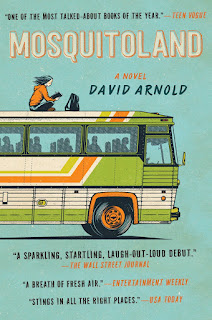
Mosquitoland by David Arnold 2-2.5/10 (342 pg)
I don’t know why I ever thought I would like this book. Even the summary sounds pretentious as hell- a girl who gets on a bus to Ohio to go find her enabler mother, running away from her father and stepmother and “finds herself” along the way. With a grating voice and a terminal case of Special Snowflake Syndrome, Mim even managed to surpass HazelGrace Lancaster to make the top of my Most Annoying Characters Ever list. Burn this book.

The Perks of Being a Wallflower by Stephen Chbosky 6.5-7/10 (213 pg)
Yes, this was the month I finally read this book. In case you’ve been living under a literary rock, The Perks of Being a Wallflower is made up of a collection of letters written by a 14 year old boy over the course of his first year of high school. His best friend has killed himself during the last year of middle school, so he has no friends until he meets a group of seniors who get him into drugs and drinking and there’s lots of subissues and the whole thing is just really complex. While I did kind of like this book, overall the choppy writing and overabundance of undeveloped issues made this book feel tired to me, and I couldn’t love it. For a better issue book I’d recommend Speak, which in my opinion is more focused likely due to its concentration on just one issue and how it affects the main character.


Beautiful Broken Girls by Kim Savage 4.5-5/10 (318 pg)
One of those YA mysteries that tries to be all mysterious and haunting but just doesn’t work. Kind of like the cover, which on one hand looks really interesting and intriguing but at the same time also kind of looks like she’s bathing in milk. This book is about a boy who’s trying to figure out why these two sisters have drowned themselves because he loves one of them, and there’s also some Catholic mysticism and magical realism and sexual abuse (because we can’t forget about that in a YA book nowadays). Perhaps this book didn’t work for me because I didn’t do the required reading before going in- The Virgin Suicides- but this book didn’t work and felt like Savage was trying too hard.

The Awakening by Kate Chopin 6/10 (195 pg)
I didn’t like this book, mostly because of Edna. I felt as if she was just a bored housewife who always wanted what she couldn’t have. Even her feelings towards her children felt disingenuous, and obligatory. So many of the issues in this book could have been solved she and her husband sat down and had a conversation, like civilized people, where they acknowledged how unhappy they were and either made an effort to fix the marriage or just let it become a marriage in name only, something was common in the late 1800s, early 1900s. The ending was also horribly selfish. The book was well written, I’ll give Chopin that, but overall, it wasn't my favorite.


The Sky Between You and Me by Catherine Alene 8/10 (485 pg)
This book was just what I wanted to read at the time. I picked it up kind of on a whim, ready for something I’d be sure to like. And this book, about a girl who develops an eating disorder after a new girl moves to town and seemingly steals away her boyfriend’s attention, as well as some other factors, like her desire to make Nationals in barrel racing like her deceased mother. I just liked this book. It’s not one of those books I think everyone will like, but it just worked for me.

Marina by Carlos Ruiz Zafon 9-9.5/10 (326 pg)
Marina is basically about a boy, Oscar, who on a late night venture into Barcelona meets a reclusive painter, German Bláu, and his daughter, the beautiful Marina. She befriends him, taking him on a Gothic adventure through old Barcelona, before the (Spanish) Civil War, in order to find out why a woman veiled in black drops a rose on an unnamed grave on the 4th Sunday of every month at approximately 10 am. Think Frankenstein, Phantom of the Opera, Edgar Allan Poe, and Bioshock all rolled into one really fantastic book. This was easily my favorite book of this month. Seriously, read it right now.


On the Jellicoe Road by Melina Marchetta 7.5/10 (419 pg)
The oversized page count is because my copy was short and thick, so the actual page count was doubled. This book is about the war between the townies, cadets, and the students at Jellicoe School, where the main character goes to and is the leader of the students. There’s also a subplot about these kids from the 80s who were on the road, and it gets pretty complex after that point. While I liked this Aussie YA classic, I wasn’t as in love with it as a lot of other people were. I think there was a great story in this novel, but the execution was lacking.


Daughter of Smoke and Bone by Laini Taylor 3.5-4/10 (418 pg)
This is the book that took my paranormal romance virginity, and, to be honest, I would like to ask for it back. In the defense of this book, I was never really that into the idea of paranormal romance (paranormal okay, I like aspects of it in mysteries, but romance not so much) as a genre anyway. But in defense of me I expect to love this book, about a girl who was raised by demons and who can’t remember any of her past. But it ended up just being Twilight with angels substituted in with vampires. Don’t trust pretty writing, kids, you’ll just end up disappointed.


The Good People by Hannah Kent 8.5-9/10 (320 pg)
Another fantastic Kent novel, this one taking place in 19th century Ireland, The Good People was just a really good book. It’s about a woman whose daughter and husband are both dead and she is forced to care for her young, disabled grandson alone. She, along with the rest of the villagers, becomes convinced that the grandson is a changeling. It shows the clash between the old Irish Gaelic folklore with the Catholic Church, and is fantastically atmospheric. If you loved Burial Rites, you will be sure to love this book too.

The Passion of Dolssa by Julie Berry 6.5/10 (446 pg)
One of those feminist historical fiction books that are all the rage nowadays, this book managed to take an interesting idea and make it into every other YA historical fiction book ever written. The book is about a Catholic mystic named Dolssa who apparently has the power to heal people. The Church thinks she’s a heretic, so they’re pursuing her. What could have been an interesting plot was instead choked by Botille, a stereotypical historical fiction female protagonist with little actual bearing on the plot and just annoyed me. I suppose this book didn't work for me as much as it worked for other people.


Cinder by Marissa Meyer 7/10 (387 pg)
Another book I read for the first time this month, and thought it was only okay. In case you’ve never heard of The Lunar Chronicles, this book is the first in that series and is essentially a science fiction retelling of Cinderella. Like Daughter of Smoke and Bone, there was a reason I was never inclined to pick this book up. I’m not a science fiction or a retelling fan. I mean, this was fun to read, don’t get me wrong, but the writing was only okay and Cinder wasn’t a protagonist I could root for, mostly because I knew she’d get out of any situation based off her sheer specialness. The plot was also predictable. But, again, I didn’t hate this book because it was mostly fun fluff.


The Cellist of Sarajevo by Steven Galloway 5/10 (DNF) (58/231 pg)
Honestly, I can’t say anything bad about this book. It was well-written and short, and about an interesting topic- a cellist who plays for 25 days in a crater where 25 people died during a bombing in some Serbian war in the 90s- but honestly just wasn’t holding my interest. I began this book before The Sky Between You and Me, but I didn’t feel much like picking it up whenever I went to read, and then got distracted by The Sky Between You and Me. I kept telling myself I would go back to it, put it on my nightstand with a bookmark hanging out of it ready to pick it back up, but just never got around to it. Then my library books were due back, so I just returned it. Maybe someday I’ll attempt it again. But not soon, I’m afraid.

Faithful Place by Tana French 8-8.5/10 (400 pg)
Not my favorite Tana French book, mostly because it felt less like a Dublin Murder Squad book and more like a domestic family drama. This book follows Frank Mackey as he goes back to his home at Faithful Place because a suitcase is discovered that belongs to a girl named Rosie who he wanted to run away with back in the 80s. The writing and the characters were excellent, as usual, but, again, if you wanted a Dublin Murder Squad book this one wouldn’t be the first I’d recommend. But if you like family dramas with some mystery elements, pick this one up.


The Shadow of the Wind by Carlos Ruiz Zafon 8/10 (487 pg)
I was excited to pick this book up after Marina. It seemed interesting, too, another Gothic novel, this one following a boy who goes to this place known as the Cemetery of Forgotten Books, and is immediately drawn to a book called The Shadow of the Wind. When he tries to search out more books by the author, he discovers that someone is systematically burning every single copy of every book he has ever written. While this book was still pretty good, at times it felt like a more dragged out version of Marina, and it didn’t really work for me the same way Marina did. I might continue on with the series, but not right away.

Splendor by Anna Godbersen 5.5-6/10 (393 pg)
Splendor, the final book in The Luxe series is one I’m more than happy to be over with. I don’t know what I can say in the summary that won’t be a major spoiler, but shit goes down in the last book. Or rather, it should go down, when you can find it in the plot. This was easily my least favorite book in the series, and was just overall very boring to me. I couldn’t really get into it and really just finished it because I had to. I didn’t want to drag this series out another month or leave it unfinished.

We Have Always Lived in the Castle by Shirley Jackson 9/10 (160 pg)
I’m in lust with this cover. Seriously. Anyway, I had only ever read The Lottery by Shirley Jackson back in like 8th grade, but the story always stuck with me. So I decided to pick up We Have Always Lived in the Castle. I don’t regret it at all. I was engrossed in this story, especially in the character of Mary Katherine- Merricat. She seemed younger than her 18 years- locked in some state of perpetual arrested development. She slightly unnerved me, and as the story progresses it becomes clear that there’s something wrong with her. It was dark and gloomy and creepy and I enjoyed it immensely. Just an aside, though- don’t read the introduction before starting, since it gives away major spoilers. In fact, don’t read any introduction before any book. I never do. I also went into this book almost completely blind, which was in my opinion the best way to read it. I don’t know if I did this book justice with my short little review, but I need more time to think on this book.

This Side of Paradise by F Scott Fitzgerald 9/10 (213 pg)
I’ve made it one of my life’s goals to read everything F Scott Fitzgerald has ever written. I feel as if that’s a doable goal- F Scott Fitzgerald wasn’t an overly prolific writer, and his novels are typically very short. It’s not as if I’m reading every single play Shakespeare put out or something. And I love the way Fitzgerald writes, his sentences are perfectly put together. But this book is something else. I noticed that a common criticism of this book is the lifestyle shown, especially the egotistic main character Amory Blaine. The thing is, this book is meant to be a scathing critique of the Jazz Age lifestyle, as with all of Fitzgerald’s work, including Gatsby. It’s an unflinchingly honest portrayal of the era that grew up to find “all Gods dead, all wars fought, all faiths in man shaken”. Like all Fitzgerald novels, it’s semi-autobiographical. Amory Blaine is F Scott, albeit a very, very negative portrayal. And the Rosalind he lost is likely Zelda, since he wrote this book after Zelda rejected his proposal because he was unpublished. In fact, he begged the publishers to publish this book earlier so that Zelda would accept his engagement without question. The writing is very eclectic, often changing. We have letters, plays, even some poetry interspersed. It’s also pretty funny, something I was surprised about because Gatsby wasn’t particularly funny. Even if this book wasn’t an F Scott Fitzgerald novel I still would have loved it, and it’s an interesting first look at the author who would soon write one of the greatest of the Great American Novels.

Night Film by Marisha Pessl 8/10 (602 pg)
I’ve always been attracted to the dark side of fiction- the strange, twisted, and mildly deranged. So Night Film seemed like it would be perfect for me- it’s got a cult classic horror director, a girl who kills herself, and a mystery with supernatural elements. And while I did like this book, the writing wasn’t the best, with the author having what seems to be a case of italic Tourette’s, and interchangeable characters. But the plotline was what ended up pulling this book through to me, so it got an 8.

The Poisoner's Handbook by Deborah Blum 8-8.5/10 (319 pg)
My first nonfiction book this year, about the birth of forensic toxicology in New York along with a bunch of poison-related murders. The science in it was easy to understand, but the bits about murder were a bit lacking, with too much time devoted to the Prohibition. Overall, though, I liked this book just fine. It wouldn’t be one of my favorite nonfiction true crime books, but it was pretty damn good. And a quick read, too.


Page total: 7,189
Average rating: 7/10 (rounded down)
Genre breakdown: 8 historical fiction
4 contemporaries
3 mystery-thrillers
2 horror
1 paranormal
1 science fiction
1 nonfiction (true crime)
Of those, 10 were adult and 10 were YA

So it was a pretty good month for me- got 20 books read in total, more than I thought I did, and my average rating was higher than I thought it was. Like I said above, I doubt April's going to be a good reading month, but we'll see how it goes.