Wednesday, November 8, 2017

Little Deaths by Emma Flint Review

WARNING: THERE MAY BE SPOILERS BELOW

“...but when tragedy strikes, there’s a tendency to assume that someone is different. Special. That there’s something about them that makes them the kind of person bad things happen to. Because the alternative—that bad things can happen to anyone, at any time—is unthinkable.”- Little Deaths, Emma Flint
Inspired by a true story, Little Deaths, like celebrated novels by Sarah Waters and Megan Abbott, is compelling literary crime fiction that explores the capacity for good and evil in us all.

It's 1965 in a tight-knit working-class neighborhood in Queens, New York, and Ruth Malone - a single mother who works long hours as a cocktail waitress - wakes to discover her two small children, Frankie Jr. and Cindy, have gone missing. Later that day, Cindy's body is found in a derelict lot a half mile from her home, strangled. Ten days later, Frankie Jr.'s decomposing body is found. Immediately, all fingers point to Ruth.

As police investigate the murders, the detritus of Ruth's life is exposed. Seen through the eyes of the cops, the empty bourbon bottles and provocative clothing which litter her apartment, the piles of letters from countless men and Ruth's little black book of phone numbers, make her a drunk, a loose woman - and therefore a bad mother. The lead detective, a strict Catholic who believes women belong in the home, leaps to the obvious conclusion: facing divorce and a custody battle, Malone took her children's lives.

Pete Wonicke is a rookie tabloid reporter who finagles an assignment to cover the murders. Determined to make his name in the paper, he begins digging into the case. Pete's interest in the story develops into an obsession with Ruth, and he comes to believe there's something more to the woman whom prosecutors, the press, and the public have painted as a promiscuous femme fatale. Did Ruth Malone violently kill her own children, is she a victim of circumstance - or is there something more sinister at play?
 

In my Silent Child review, I mentioned that I hate a certain type of literary mothers I like to call the "martyr mothers". Books with martyr moms in them are usually told from their point of view and the reason why I hate them is because they are always so beautiful and pure and innocent and they're always long-suffering and it seems like the only reason they have children is to make themselves look like even more of a martyr. The only use their children have in the plot is to make themselves look better. And oh boy, do we have a case here in the form of Ruth Malone. Her life is so hard, she has to deal with two young kids all by herself and has to work long hours as a cocktail waitress and also has to do with the police going after her when her children turn up dead. I couldn't really blame the police for doing so, since she was the last person to see them alive and she always seemed like she was hiding something, like when she was protesting about the police searching her apartment and got annoyed when they pointed out the amount of booze bottles in the trash, or when they talked about how much she was drinking or how many guys she brought home. I don't know about you, but drinking and men coming and going a) isn't a sign of a good mother and b) means that there is very good chance that either she did it or one of her boyfriends did. That's just common sense.

I was also annoyed by the reporter, who became convinced she was innocent, why? Because Ruth was so bewitchingly beautiful that she couldn't have committed such a heinous crime and besides, she was a mother. How could a mother kill her own children? Andrea Yates, anybody? I mean, it doesn't happen often because, you know, nature and hormones and all that, but still, is there any reason why Ruth couldn't have killed them? 

Flint is absolutely horrible at fleshing out her characters, by the way. I mean, the detective was so transparently evil that it was obvious he was the bad guy right from when he ate spaghetti without closing his mouth. It's just plain bad writing and also kind of offensive to use someone's appearance or manners to show that they are the antagonist, just as bad as it is to use beauty to show how good and pure someone is. The only time one can get away with that is in fairy tales meant for children. 

But the thing that pissed me off the most, made me think of the godawful Silent Child the most, is the ending. So here we go:

WARNING: MAJOR SPOILERS BELOW
It's revealed at the end that Frank did it, which I kind of figured because at some points it's fairly obvious- it annoyed me because Ruth couldn't have done it because she was a mother, but Frank sure as hell could have killed them even though he's a father- but I digress. It's why he killed the kids that really got me going, since it's revealed that he killed them to get Ruth's attention. Jesus fucking Christ, the death of two small children was all because Ruth was so beautiful and enchanting. The kids were never anything more than a way to show everyone how great Ruth was and in the end, were nothing more than a fucking plot point. This is worst than Emma's "friend" helping kidnap Aiden because of how jealous she was of Emma. What the actual fuck, Flint?
MAJOR SPOILER SECTION OVER

The worst part about this book is that the writing is actually kind of decent, which means it's not even enjoyably bad the same way Silent Child was. It's just straight up bad and even offensive. It's also somewhat historical fiction- in the 60s- but there's not really much done with that. In the end, it's a feminist thriller, which means I probably shouldn't have picked it up in the first place, but it will definitely make my least favorites list at the end of the year. I hate you so much, Little Deaths, that you may replace Missing as my 1# least favorite book of 2017

2 out of 10

Monday, November 6, 2017

Goodbye Days by Jeff Zentner Review

WARNING: THERE MAY BE SPOILERS BELOW


“Funny how people move through this world leaving little pieces of their story with the people they meet, for them to carry. Makes you wonder what'd happen if all those people put their puzzle pieces together.”- Goodbye Days, Jeff Zentner
What if you could spend one last day with someone you lost?

One day Carver Briggs had it all—three best friends, a supportive family, and a reputation as a talented writer at his high school, Nashville Academy for the Arts.

The next day he lost it all when he sent a simple text to his friend Mars, right before Mars, Eli, and Blake were killed in a car crash.

Now Carver can’t stop blaming himself for the accident, and he’s not the only one. Eli’s twin sister is trying to freeze him out of school with her death-ray stare. And Mars’s father, a powerful judge, is pressuring the district attorney to open a criminal investigation into Carver’s actions.

Luckily, Carver has some unexpected allies: Eli’s girlfriend, the only person to stand by him at school; Dr. Mendez, his new therapist; and Blake’s grandmother, who asks Carver to spend a Goodbye Day with her to share their memories and say a proper goodbye to his friend.

Soon the other families are asking for a Goodbye Day with Carver, but he’s unsure of their motives. Will they all be able to make peace with their losses, or will these Goodbye Days bring Carver one step closer to a complete breakdown or—even worse—prison?


This is a fine book. Getting that out of the way right now because the more I talk about it the more I may convince you that I really didn't like it, when I did. It wasn't my favorite book ever, but it was enjoyable enough. 

I kept forgetting that it was written by Jeff Zentner, especially since this is basically a long Adam Silvera book. The characters, the writing style, all very Adam Silvera-y. I like Adam Silvera, don't get me wrong, but he's not my favorite YA contemporary writer and his books are typically on the younger side of YA. Still, better him than Becky Albertalli or John Green. 

Plotwise, the book reminds me a ton of The Lies About Truth, what with the car accident and the main character blaming himself for the death of his friends like how Sadie blamed herself for the death of Trent, as well as similar musings about God and forgiveness. Which I liked, especially given that The Lies About Truth was one of my favorite books of last year.

My biggest issue with Goodbye Days is the amount of cringe that it's in the book, mostly surrounding Jessmyn and Carver. I had such a hard time with their parts because, well, they reminded me of that Diversity Day episode of The Office that was basically unwatchable to me because I dislike that particular brand of cringe comedy. I also felt strange about the way Zentner introduced diversity to the story, like he had to get that out of the way before he could start to flesh out his characters. The first time we meet Jessmyn, she comments about her "Filipino genes", which struck me as a very odd thing to say to someone. And in casual conversation she keeps bringing up the fact that she's Asian, usually in really awkward places and, frankly, every time she showed up in a chapter or whatever I went into skim mode because their conversations made me super uncomfortable. I also thought Georgia's interactions in the beginning with Dr Mendez were really awkward because she is only there to inform us of his husband and children, the whole conversation coming across as when Barney from How I Met Your Mother introduced his brother James as being his gay black brother, though not nearly as enjoyably awkward as that scene. 

Also, the writing was pretty inconsistent. I loved the way certain parts were written, usually the sentences right before the chapter ends and Zentner tries to channel Cormac McCarthy, with short, beautiful sentences that hit hard. The rest of the book was okay, but very much a YA novel with teenspeak and lots of often gratuitous swearing. The really pretty parts felt like a tease, because if that's how he can write why doesn't he write the entire book like that? Because, take away those parts, and you have a book that could have been written by any of the recent YA hit writers, from Nicola Yoon to Becky Albertalli to Adam Silvera.

I also wish we got some of Carver's writing, because apparently he writes a lot of "dark Southern stuff." But then I'd probably wish that Zentner just wrote a Southern Gothic novel because if there's any literary movement that needs a revival, it's that one. Get your Faulkner on, dude!

Happily, Goodbye Days isn't as anvilicious, to borrow a TV Tropes term, as I thought it would be. It's actually more of a subtle take on texting and driving as I thought it would be, even if I did think it was kind of a stretch to go the potential prosecution route for Carver, especially when it didn't go anywhere. I also took issue with the comparing of the case to the one of the girl who convinced her best friend to kill himself, because it's like comparing apples to oranges. Carver didn't know that his text would cause a car accident, whereas that girl sure as hell knew her texts would cause that kid to kill himself (and who the fuck does, anyway?). 

I also did like some of the characters. I liked Carver and the rest of the... Sauce Crew... just fine, but my two favorite characters besides them were Nana Betsy and, surprisingly, Judge Edwards. Both the pain shown by those characters was done very well, contrasted with Eli's family who wasn't all that well developed. It would have been nice for Adair or Eli's parents to get that same moment of redemption even Judge Edwards got in the end.

The ending was also really nice, and even brought a few tears misting the edges of my eyes. The ending made the book, really.

So, I did enjoy it. It's not my favorite book I've ever read, not even among the best YA I read this year. It's a solid contemporary, just not that original and kind of replaceable. I don't know if I'll ever read The Serpent King, but I'm happy with having read this book, even if I never read anything else by Jeff Zentner. Of course, if he ever gets bored with this YA contemporary stuff and decides to become the Carlos Ruiz Zafon of Southern Gothic, I will be all over that.


7.5-8 out of 10

Friday, November 3, 2017

October 2017 Wrap-Up

I'm a little sad October's over since it's my favorite month of the year- of course, when you live in New England it's kind of impossible to not love October, since it's one of those very New England months when the leaves change and apples appear on trees and farms advertise their pumpkin patches and haunted hay rides and you suddenly feel the need to own a white flat-faced Colonial. But enough of that. Here's what I read!

The Dead I Know by Scot Gardner 8.5/10 (reread) (158 pg)*
My Review: The Dead I Know by Scot Gardner
  Kicked off this month with a reread of one of my retrospective favorites of 2016. This is one of the best YA funeral home books I've ever read, and one of the few books to actually bring a tear or two to my eyes. This was the first book in my funeral home mini series I had over the course of the month, and ended up remaining as one of my favorites. This book is about a boy who is a sleepwalker haunted by horrific dreams and becomes an apprentice to a local mortician who really takes him under his wing.


Things I'm Seeing Without You by Peter Bognanni 5/10 (332 pg)*
My Review: Things I'm Seeing Without You by Peter Bognanni
  It's amazing how quickly an author can fall in my eyes. I was really impressed with The House of Tomorrow, a book that surpassed all my expectations, and avoided many of the pitfalls of YA fiction. With this book, Peter Bognanni has decided to john the ranks of David Arnold and Scott Stambach and Matthew Quick and all the other John Green imitators to write a disappointing teen book, a book that isn't original in the slightest. It's not as bad as, say, Mosquitoland or Every Exquisite Thing, but in comparison to The House of Tomorrow, it was just sad. Things I'm Seeing Without You was the second book in my funeral home mini series since it's about a girl dealing with grief through her father's funeral planning business, though it's done in a horribly inconsistent way.


The Boy in the Black Suit by Jason Reynolds 8.5/10 (reread) (255 pg)
My Review: The Boy in the Black Suit by Jason Reynolds
  The Boy in the Black Suit is a better book than I remember it to be, something that almost never happens. But damn, Matt Miller is just such a great character, it's hard for me to not love this sweet, short little book about a boy who goes to work in a neighborhood funeral home after his mother died. I'm happy that my funeral home series gave me the chance to revisit it.


Manhattan Beach by Jennifer Egan 4.5/10 (448 pg)
My Review: Manhattan Beach by Jennifer Egan
  Well, this wasn't nearly as good as I thought it would be. Manhattan Beach is Jennifer Egan's first foray into historical fiction and it shows, given that this is a hot mess of a book, I'm not quite sure how I stuck with it in fact. It was confusing and not really worth my time in the end. For those still curious, Manhattan Beach is about a girl and her father, the father works in organized crime during the Great Depression and the girl becomes the first female diver during WWII.


The Darkest Corners by Kara Thomas 7/10 (327 pg)
My Review: The Darkest Corners by Kara Thomas
  I don't know how I feel about Kara Thomas now. Admittedly, I was probably jumping the gun when I declared her to be potentially my new favorite YA thriller writer in my Little Monsters review, because I loved that book but this one just wasn't as good as Little Monsters. In fact, it reminded me a lot of Dark Places by Gillian Flynn, with the same basic plot and I liked this one just about as much as Dark Places. This is about girl who is investigating the disappearance of one of her friends, a disappearance that has a lot in common with one of her sister's best friend, who was found murdered shortly after. It was alright, but I look forward to see what's next for Kara Thomas, hoping it's more along the same lines as Little Monsters as opposed to The Darkest Corners.


Putting Makeup on Dead People by Jen Violi 5/10 (326 pg)
My Review: Putting Makeup on Dead People by Jen Violi
  I first started reading this book 3 years ago and never finished it. And now, reading the whole thing, I can see why. It just wasn't really what it advertised itself to be and was very much a YA product of its times, reading like a wish-fulfillment novel and had very heavy-handed messages. It just wasn't as deep or subtle as The Dead I Know or as laugh-out-loud funny as The Boy in the Black Suit. The really only redeeming thing about this novel, which is about a girl getting over the death of her father so she decides to pursue a career in mortuary science, is that the ending was really nice. 


Norwegian Wood by Haruki Murakami 9/10 (296 pg)
My Review: Norwegian Wood by Haruki Murakami
  Norwegian Wood is either everyone's favorite or least favorite Murakami book. I haven't read anything else by Murakami, but I loved Norwegian Wood even though I didn't really expect to. Toru and Midori ended up being two of my favorite characters ever, and their exchanges never failed to make me laugh. The way Murakami captured Tokyo in the 60s fascinated me. What else can I say, beyond the fact that I loved it?


The Burning Girl by Claire Messud 6/10 (247 pg)
My Review: The Burning Girl by Claire Messud
  Don't be fooled by the pretty writing or seemingly adultness of The Burning Girl, this is a fairly run of the mill story about two friends who find themselves growing apart. This is a tired story and Messud does not do much new with it. While reading I often thought of Emily Fridlund's History of Wolves, and this novel had the same effect as that one for me, except The Burning Girl was less interesting.


Belle Epoque by Elizabeth Ross 5/10 (323 pg)
My Review: Belle Epoque by Elizabeth Ross
  Sometimes I like to read some fluffy historical fiction just to unwind a bit, and Belle Epoque has been on my radar for a long time, since every time I go to my library that book stared down at me from above the YA Rs-Ss bookcase. I finally picked it up because I really, really wanted to read some historical fiction and this was the only one I could find that wasn't about WWII and I didn't hate the plot. But at the same time, it wasn't really as great as it could have been, and I liked it (or didn't like it) about as much as I liked (or didn't like) Gilt. Belle Epoque is about a girl who works in service where rich women hire plain girls to make themselves look better. Good idea, mediocre execution.

Handle With Care by Jodi Picoult 7/10 (reread) (535 pg)*
  Another Picoult reread, because her books are just really easy to reread. I actually remember liking this book more than I did on my reread. In fact, when I read it for the first time I gave it a 9 out of 10 (five stars) a way higher score than it deserved upon rereading. In fact, I actually used to consider it better than My Sister's Keeper, though now I believe that My Sister's Keeper is the superior novel. Picoult is one of those authors who just writes the same book over and over again, whether or not she's successful at it is up to you. To me, her books are great when you don't want to think too much on them, this novel included.


The Courage to Create by Rollo May 8.5/10 (144 pg)
  I never wrote a full review for this one because, well, I just forgot too. I read one chapter a week for a 2 months because I found that, as much as I liked the writing style, I couldn't take more than one chapter at a time. Still, I really enjoyed Rollo May's writing and this thoughts on the act of creativity and how it fits into human society. It made me feel inspired to start writing again.
The Girl Who Could Fly by Victoria Forester 8.5/10 (reread) (156 pg)*
  The Girl Who Could Fly has a very special place in my heart, being one of my favorite books as a child, and also I swear to God Piper and Conrad were my first OTP. I felt the need to reread this book, and was shocked to find out how short it was- when I was a kid, this book seemed like 300 pages. But I still really liked it, mostly because of how surprisingly dark it is for a kids' book (that probably explains why I read the books I do), has a really easy to read writing style, and also there's the nostalgic atmosphere. The darkness and even light body horror in The Girl Who Could Fly led me to novels like Unwind by Neal Shusterman and, later on, books like The Butterfly Garden and Marina, all of which I count among my favorite books to date.

Music of the Ghosts by Vaddey Ratner 8.5/10 (320 pg)
My Review: Music of the Ghosts by Vaddey Ratner
  Music of the Ghosts is a gorgeously lyrical novel about Cambodia in the wake of the nightmare that was the Pol Pot regime, something I know very little about. This novel, while it does drag in some places, is also extremely atmospheric with beautiful descriptions of Cambodia and a quietness, a calmness that makes the horrors of the massacre of Cambodians stand out all the more. Highly recommended.


The Last Four Days of Paddy Buckley by Jeremy Massey 8.5-9/10 (304 pg)
My Review: The Last Four Days of Paddy Buckley by Jeremy Massey
  If not for Norwegian Wood, this would be my favorite book of the month, because I kind of loved it. It was funny, it was entertaining, it was dark, it was endearing, it was just great. It reminded me a lot of my favorite contemporary novel ever, I Am the Messenger, especially with the characters of Paddy and Ed. This thriller about a guy who works in a funeral home and accidentally runs over a famous mobster, quickly became one of my favorite mysteries ever.

The Museum at the End of the World by John Metcalf 5/10 (DNF) (89/372 pg)
  I used my DNF this month on The Museum at the End of the World by John Metcalf, not to be confused with John Metcalfe. I liked the first story okay, but the writing style was extremely confusing and I had a hard time getting into the story at all. It was the kind of book I couldn't focus on at all and yet I was extremely reluctant to actually DNF it. In the end, I just put it down and never picked it back up again. Can't say I'm too sad about that, even if it does have a really great title.


Salaam, Love by Ayesha Mattu and Nura Maznavi 8/10 (248 pg)
My Review: Salaam, Love by Ayesha Mattu and Nura Maznavi
  Salaam, Love does an interesting thing in that it captures a group of people who little is said about, except bad things. Muslim men. Whereas Muslim women are often given a voice, Muslim men are regulated to the sidelines. And that's what makes Salaam, Love an interesting read. While I can't say I loved it, though I rarely love anthologies anyway, I still enjoyed reading it and getting into the minds of these Muslim men on their experiences with love.


The Midnight Dance by Nikki Katz 4.5/10 (320 pg)
My Review: The Midnight Dance by Nikki Katz
  I've always been captivated by ballet stories, and so The Midnight Dance was an obvious pick up for me, being, or at least I thought it was, a contemporary thriller about a ballet school in Italy. Instead, it was a historical fiction (not the bad part) with some thriller elements but also equally as many steampunk ones, and it was only kind of about ballet- the ballet parts were added on and not really elaborated as to why they were there. I think this was supposed to be a 12 Dancing Princesses retelling of some kind, though it was never really advertised as one. This is a complete miss, and one I'd advise you to pass up on.


The Five Daughters of the Moon by Leena Likitalo 7/10 (256 pg)*
My Review: The Five Daughters of the Moon by Leena Likitalo
  My last fiction novel of the month was The Five Daughters of the Moon, a long ass title for a short fantasy novel. I didn't hate this book the way I was expecting to, in fact, I didn't mind it at all. It was a decent enough take on the Russian Revolution and the story behind the Russian Revolution, although admittedly it could have been better. The writing was also better than I thought it would be, although it is quite obviously translated. I guess I'd recommend this Russian-inspired fantasy novel, and it's pretty cheap, too.


The Victorian Book of the Dead by Chris Woodyard 8/10 (360 pg)
My Review: The Victorian Book of the Dead by Chris Woodyard
  And for my last book of the month, my Halloween book, The Victorian Book of the Dead, a fun coffee table book about Victorian death practices with some pretty great stories about mourning and also the interesting deaths Victorians managed to succumb to. Highly recommended- it's also got some great illustrations!

Page total: 5,444
Average rating: 6.5/10 (rounded down by not much) (not counting rereads)
Genre breakdown: 6 contemporaries 
                 6 historical fiction
                 3 nonfiction (1 historical, 1 anthology, 1 psychological)
                 2 mystery-thrillers
                 1 fantasy
                 1 science fiction
Of those 11 were adult, 7 were YA, and 1 was children's

I read 19 books this month, 1 less than I did in September but still better than I have in all summer. I have little hope for November, given that I'll be really busy all month, but I'm hoping to use it as a catch-up month to get to all the books I've been putting off, like Donna Tartt's The Secret History. We'll see how it goes.

*e-books

Tuesday, October 31, 2017

The Victorian Book of the Dead Edited by Chris Woodyard Review

Chris Woodyard, author of the The Ghosts of the Past series, digs through long-buried newspapers and journals, for this fascinating look at the 19th-century obsession with the culture of death. The Victorian Book of the Dead unearths extraordinary tales of Victorian funeral fads and fancies, ghost stories, bizarre deaths, mourning novelties, gallows humor, premature burial, post-mortem photographs, death omens, and funeral disasters. Resurrected from original sources, these accounts reveal the oddities and eccentricities of Victorian mourning. Packed with macabre anecdotes, this diverting, yet gruesome collection presents tales ranging from the paranormal and shocking to the heartbreaking.

Happy Halloween! This is the first year I'm not doing anything for the holiday beyond rewatching the Halloween episodes of Bob's Burgers and How I Met Your Mother and listening to The Amphibious Man on Bandcamp since I have other things going on in the coming days that require my attention, but it's still my favorite holiday, something that's fairly obvious given my taste in humor and literature borders on the dark side. Like this book, which I was saving exclusively for Halloween.

This isn't a fine, serious work of nonfiction. Instead, it's more on par with the fun to read and vaguely trashy nonfiction like the book Weird New Jersey and its many spinoffs. It's made up of newspaper articles and commentary from the Victorian times detailing their quite morbid culture of death, something that the Victorians were notorious for. In this book, Woodyard discusses everything from death photography to being buried alive to the clothing mourners wore and the Victorian strive to do everything, including mourning, properly. 

My favorite chapter was probably the chapter Died of Lizards, about strange ways Victorians met their ends, including by a gas addicted bird, 2 women who lost everyone in their family within a span of a very short time (in one case, her child was struck by the hearse carrying her husband), and "the effects of 'skipping the rope'." whatever the hell that means. There's something very Gorey-esque about these stories, and it reminded me of two of his short stories in particular- The Gashlycrumb Tinies (obviously), and The Hapless Child. What really takes the cake about these stories is dry way the reporters comment on these strange demises. Needless to say, I found them hilarious.

The fashion historian in me also feels the need comment on how much I liked the chapter Crape too. It's got lots of fun details on the garments worn by mourners.

The Victorian Book of the Dead is a coffee table book that also happens to have some great information on Victorian death. And, of course, it's the perfect book to read on a chilly, October night. Recommended.


8 out of 10

Monday, October 30, 2017

The Five Daughters of the Moon by Leena Likitalo Review

WARNING: THERE MAY BE SPOILERS BELOW

The Crescent Empire teeters on the edge of a revolution, and the Five Daughters of the Moon are the ones to determine its future.

Alina, six, fears Gagargi Prataslav and his Great Thinking Machine. The gagargi claims that the machine can predict the future, but at a cost that no one seems to want to know.

Merile, eleven, cares only for her dogs, but she smells that something is afoul with the gagargi. By chance, she learns that the machine devours human souls for fuel, and yet no one believes her claim.

Sibilia, fifteen, has fallen in love for the first time in her life. She couldn't care less about the unrests spreading through the countryside. Or the rumors about the gagargi and his machine.

Elise, sixteen, follows the captain of her heart to orphanages and workhouses. But soon she realizes that the unhappiness amongst her people runs much deeper that anyone could have ever predicted.

And Celestia, twenty-two, who will be the empress one day. Lately, she's been drawn to the gagargi. But which one of them was the first to mention the idea of a coup?

Inspired by the 1917 Russian revolution and the last months of the Romanov sisters, The Five Daughters of the Moon is a beautifully crafted historical fantasy with elements of technology fuelled by evil magic.

There's a fascinating new trend in YA in which books that I would consider to be straight up fantasy are filed under the historical fiction genre because- get this- they're based off a real culture or country or period in history. The Walled City is one I can think of off the top of my head. Or basically all the new releases on the 2018 YA historical fiction releases lists. Usually, I avoid this subgenre because I'm not interested in fantasy. I've never been particularly captured by it, even when I was little, and with these new "historical fiction" novels I always wonder why I should read a book based on, let's say, the Austro-Hungarian Empire when I can read a book that actually is about the Austro-Hungarian Empire. I do, however, have one weakness.

Tsarist Russia.

Which is what The Five Daughters of the Moon is based on. More specifically, it's based on the Russian Revolution. It also replaces the Tsar with an Empress, and all the Grand Duchesses and the Tsarevich are turned into princesses, or Daughters of the Moon as the book dubs them. There's a little something lost in translation here, mostly because one of the biggest divisions between the Tsar and his people surrounded the Tsarevich, how long it took for one to come and also how he was hidden away from the people ever since his birth and subsequent hemophilia diagnosis. Also, Rasputin. Still, to Likitalo's credit she does give a new reason for a Rasputin-like character, Gargargi Prataslav, to enter the scene, as an advisor to the Empress. Prataslav has two roles here, actually, to replace Rasputin and, bafflingly, to replace Lenin. Now, it is not an unusual thing to villainize Rasputin, but one cannot deny that he would not have benefitted at all from the fall of the Romanov dynasty. He would have, after all, lost his main protectors, the Tsar and Tsaritsa. And the main problem with Rasputin anyway was that the other nobility didn't like him, not necessarily that the people hated him. But then again, Rasputin's an easy target to make a villain, given that he already looks like a drunk, STD ridden sorcerer. Lenin on the other hand, is often ignored by those who write books based off the Romanovs, strange given that he was the reason for their execution. I wonder why that is, as it's not like he doesn't have looks that can be caricatured anyway (he resembles a goat, or at least he does to me. A goat crossed with Leo DiCaprio). But okay, for the purposes of not confusing people, Prataslav is a strange hybrid of the two.

The Five Daughters have their obvious parallels to each Grand Duchess (and the Tsarevich, of course). Celestia is Olga, Elise is Tatiana, Sibilia is Marie, Merile is Anastasia, and Alina is Alexei. Alexei's hemophilia has been replaced by some form of mental illness, which does have some prophecy like abilities. Each Daughter had their own likes and dislikes, but I quickly grew tired of switching constantly between 6 points of view, and the chapters felt repetitive quickly.

I also wished we got more from the Crescent Empress and why exactly the people wanted to overthrow her besides focusing more on war than on the problems at home. I mean, the Russian Revolution was about that, but it was also about autocracy and how one unfit ruler at the exact wrong time can spell death to a centuries old system of government. The book lacked that.

So what does it do well? Well, I liked the writing. I mean, sure, there was a definite translated feel to it, but that didn't bother me as much as I thought it would and I liked it okay. I also really liked Likitalo's worldbuilding and how she paid homage to the time without directly ripping it off. I especially liked the bits about the souls and soul beads. 

And I did think that the Great Thinking Machine is a good, if a bit juvenile, metaphor for communism, especially to a layperson. While it would be a bit more fitting for a children's book, the idea of a machine that would make everyone equal but must be powered by human souls is, well, communism easily explained.

I mean, this isn't a perfect book in my eyes, as it does drag a bit and I never got too invested in the characters. But the world Likitalo created just captured my imagination, and it was short enough that I could read it easily. I liked it just fine.

7 out of 10

Sunday, October 29, 2017

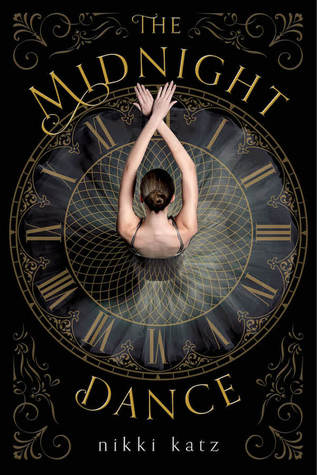
The Midnight Dance by Nikki Katz Review

WARNING: THERE MAY BE SPOILERS BELOW

Someone stands behind me... a deep breath near my ear... cold fingers brush the skin of my bare shoulder and pull my braid to the side... a soft touch of lips on my neck... followed by both hands circling like a noose... fingers reach to nudge my chin up... a whisper... 'stand proud, darling, you're mine, always mine.'”- The Midnight Dance, Nikki Katz
When the music stops, the dance begins.

Seventeen-year-old Penny is a lead dancer at the Grande Teatro, a finishing school where she and eleven other young women are training to become the finest ballerinas in Italy. Tucked deep into the woods, the school is overseen by the mysterious and handsome young Master who keeps the girls ensconced in the estate – and in the only life Penny has never known.

But when flashes of memories, memories of a life very different from the one she thinks she’s been leading, start to appear, Penny begins to question the Grand Teatro and the motivations of the Master. With a kind and attractive kitchen boy, Cricket, at her side, Penny vows to escape the confines of her school and the strict rules that dictate every step she takes. But at every turn, the Master finds a way to stop her, and Penny must find a way to escape the school and uncover the secrets of her past before it’s too late.

Last year, one of the books I was looking forward to the most was a book called Glitter by Aprilynne Pike, purely because the plot sounded so awesome (and the cover was absolutely gorgeous) I couldn't bring myself to pass it up. Nikki Katz's The Midnight Dance reminds me of that book. Both books are basically uncategorizable. I mean, Glitter is a science-fiction-y futuristic novel with both fantastical and historical elements. The Midnight Dance is steampunk-y, kinda historical fiction with some thriller elements thrown in there, too. The difference between the two books is that with Glitter, I knew what I was getting myself into. With The Midnight Dance, I thought it was a contemporary with an added thriller aspect, because that's what Goodreads led me to believe. So it was a shock when the first chapter started out with 1859 under chapter heading. And I was even more surprised when the main narrative opened in the year 1879. Wait, is this historical fiction? I said to myself, pleasantly surprised. I mean, sure, it was Victorian historical fiction, which admittedly isn't my favorite thing ever, but any historical elements added to a story always makes it better (so says the history major). 

Which made it all the more disappointing when there was very little historical fiction parts at all. Katz has this very abstract, likely fairy-tale influenced view of the 19th century and it's apparent in the book. I mean, if you're going to set your book in a time period other than the present, at least do some goddamn research. Not only that, she gave us a specific place and time, which was Italy. Italy during the years 1859-1879. And yet, not one mention of the Italian unification, lasting from 1848 to 1871. There were also lots of abstract descriptions of things like dresses and mentions of courts, and even a ridiculously attractive Prince showing up, Prince Jacobus (there was never a Prince Jacobus of Italy; that's not even an Italian name), and it was around that part that I thought maybe this was a retelling of... something. The Twelve Dancing Princesses, maybe? But that might be a reach, especially because of how little the bare bones of both stories have in common. But there is a fairy-tale quality to the book, albeit a very manufactured one.

The main issue with the book, though, is not the historical yet lack of historicalness setting, it's the characters. They aren't very good, for starters. There was a sort of specialness of Penny that I hated, and both her and Cricket bogged down the plot greatly. They just weren't all that likable or even interesting. Also, just a little nitpick, but Penny's name annoyed me from the get go. Penny's not an Italian name. Penelope's not even an Italian name. You couldn't even pronounce it in Italian, or at least not easily. Peh-neh-lo-peh (four years of high school Italian, baby). Her name stuck out to me, especially since most of the characters had traditional Italian names- Bianca, Maria, Cecilia, Nella, even Tatiana (Ana is close to a proper Italian name, but it should be Anna). Yes, I think about things like this. I don't have a social life.

There's also very little about ballet in here. Which is disappointing to say the least. I love reading about ballet. Also, the only Italian bit besides the setting is the food, which seems lazy and stereotypical.

I suppose that if this book is anything, it's steampunk. Of course, I could be way off the mark here since the closest I've ever come to steampunk is reading, yes, my beloved Marina, but the plot is pretty close to what I imagine steampunk to be, with a Victorian setting and Bioshock-like "body horror" (it's tame stuff, though). In fact, it reminded me of this middle grade horror novel I read last year called Broken Dolls. But at the same time, it doesn't embrace its steampunkness like the above books did. It doesn't go the extra mile to craft what could be a great, spooky, Gothic horror novel just in time for Halloween. I mean, the plot is just screaming for some like Carlos Ruiz Zafon to get a hold of it. In case you can't tell, I'm imagining Marina in an Italian ballet school and it's wonderful. Instead, Katz attempts to keep the book ground in reality, but not in a way that works in its favor. In the end, I couldn't suspend my disbelief enough to get into the story, the way I could for books like Marina or even Glitter. Instead, I kept questioning things, like why Tatiana's hair was blue (the explanation is priceless: apparently, Tatiana needed a lung replacement and that turned her hair blue. Someone, please tell me that's actually a thing). 

The pacing felt off, too. I never thought I would say this but this should have been a slow-burn of a book. It should have started out a lot slower, maybe made it so Penny didn't stick out right away as the girl who was different from all the other girls, the one who hated pink and ballet and rebelled against the system. As is, the book felt kind of juvenile. 

In the end, The Midnight Dance is one of those books where I didn't hate it, but it didn't know what it was or what it wanted to be. A steampunk horror novel? A retelling of The Twelve Dancing Princesses? Historical fiction? A thriller? It's not nearly trashy enough to be as guilty pleasure fun as Glitter was and it's not well written enough to be a Marina-esque Gothic novel. It wasn't even enjoyably bad enough to be another Violet Grenade, another book that blends fantasy elements with a real world thriller novel. I wasn't as hard on the book as I might have been a month ago, but I don't think I'd reread it any time soon.

4.5 out of 10

If you liked this book, you may also like:

Saturday, October 28, 2017

Salaam, Love edited by Ayesha Mattu and Nura Maznavi Mini Review

From the editors of the groundbreaking anthology Love, InshAllah comes a provocative new exploration of the most intimate parts of Muslim mens lives. Muslim men are stereotyped as either oversexed Casanovas willing to die for seventy-two virgins in heaven or controlling, big-bearded husbands ready to rampage at the hint of dishonor. The truth is, there are millions of Muslim men trying to figure out the complicated terrain of love, sex, and relationships just like any other American man. In Salaam, Love, Ayesha Mattu and Nura Maznavi provide a space for American Muslim men to speak openly about their romantic lives, offering frank, funny, and insightful glimpses into their hearts-and bedrooms. The twenty-two writers come from a broad spectrum of ethnic, racial, and religious perspectives-including orthodox, cultural, and secular Muslims-reflecting the strength and diversity of their faith community and of America. By raising their voices to share stories of love and heartbreak, loyalty and betrayal, intimacy and insecurity, these Muslim men are leading the way for all men to recognize that being open and honest about their feelings is not only okay-its intimately connected to their lives and critical to their happiness and well-being.

This is an anthology of Muslim American men talking about their experiences with romance, something I likely wouldn't have picked up if I didn't have a class that made this required reading. Not that I have any problem with the subject matter, but because, like most people, I have middling luck with anthologies. In fact, I don't know anyone who actively seeks out anthologies or even really likes them. Most people I know just buy them because they like or recognize one or two of the authors and figured what the hell. 

The problem with anthologies is that, for every great entry, there's a dud. In this book, I found some stories I really liked and connected with, and some I didn't care for at all. Some of the writers had wonderfully distinct voices- especially the African American writers- some did not. Some I found sweet and endearing, some I did not. Like with many anthologies, I only really liked one or two and, on the flip side, only really hated one or two. Otherwise, I felt pretty lukewarm on most of them. 

It is interesting to hear Muslim men speak on their beliefs about love, especially since I rarely hear from male Muslims. Sure, there's books like The Kite Runner, but I find that most Muslim books published in America are written by women and from a female point of view, and unfortunately, Muslim men are often villianized. So I liked that aspect. And the anthology is easy to read, most of the voices present striking me as the kind of people I'd probably hang out with in real life if given the chance. I don't know if I really understand the inner lives of Muslim men after reading this, but it was interesting enough if just for the peek into the lives of others. What can I say, I like that kind of stuff.


8 out of 10